Hey there, if you’re here scrolling because you need a guardrail pile driver for your highway, road construction, or civil works project — you’ve probably already realized this isn’t a “one size fits all” tool. I’ve been supplying these bad boys for the last 8 years, and let’s be real, the first question almost every new buyer hits is: “What the hell is a guardrail pile driver gonna set me back?” No fancy textbook jargon, no confusing spreadsheets, just the straight talk I give every caller and email I send. Guardrail Pile Driver

First off, let’s cut to the chase: there’s a way wider price range than you might think. It’s not just a number — it depends on what you actually need for your job, and skipping that step will either leave you overpaying for bells you’ll never use or stuck with a machine that can’t handle your work. Let’s break this down like we’re chatting over coffee, no stuffy corporate tone allowed.
First, the bottom end: the “entry-level to mid-tier small units.” These are the ones we see going to small construction crews, local road maintenance teams, or guys working on private properties, rural lanes, or small subdivision streets. I’m talking about the portable, skid-steer mounted, or mini tracked guardrail pile drivers here. Let’s be clear — they’re not for highway interchanges or heavy-duty, all-day pounding, but they get the job done for light to medium work. Price-wise, these usually land between $12,000 and $25,000. Wait, that’s a big gap? Yeah, let’s unpack that. The $12k side is the super basic, compact mini ones — think 20 to 30 horsepower engines, hand-fed piles, and designed mostly for small, low-stakes jobs. They’re perfect if you’re doing occasional repairs, installing a short stretch of guardrail on a back road, or only have a tiny budget. The $25k end of that range is the upgrade: these still fit on a small skid steer, but they’ve got more power (like 40 hp), automatic pile feeding, and can handle standard 10-gauge steel piles without struggling. I sold one last month to a crew doing a new neighborhood access road, and they texted me a week later saying it ran nonstop for 2 days with zero issues. These entry-level units are great for new guys testing the waters or small teams that don’t need heavy-duty capacity.
Next up, the workhorse mid-range models. This is where most of our regular commercial clients shop — state DOT projects, large road construction companies, crews doing miles of highway guardrail, or guys who need a machine that can run 8-hour days, 5 days a week, no breakdowns. These aren’t the tiny portable ones, and they’re not going to replace a full-scale production rig for massive projects, but they strike the perfect balance between power, reliability, and cost. What’s the price here? It’s roughly $25,000 to $55,000. Let’s split that range too. The lower end of mid-range ($25k to $40k) is the tracked or wheeled units with 50 to 70 hp engines, hydraulic pile feeding, adjustable pile length, and enough weight to pound 12-foot, 8-gauge steel piles deep into compacted soil, gravel, or even soft rock. We’ve got a regular client who’s a regional DOT foreman, and he swears by these for their weekly maintenance routes — they’re fast, easy to move between job sites, and don’t require a massive transport truck. The upper end of mid-range ($40k to $55k) is the upgraded versions: these have advanced hydraulic systems that reduce vibration (game-changer for operator fatigue), automatic depth sensing so you don’t have to guess how deep the pile is, and can handle longer, thicker piles up to 20 feet. I sold one of these last quarter to a company working on a mountain highway project in the Pacific Northwest, and they said it cut their pile installation time by 30% compared to their old entry-level unit. These mid-range models are the most popular for a reason — they work hard, hold their value, and don’t break the bank.
Now, the heavy-duty big rigs — the ones for massive highway projects, high-traffic interchanges, or remote sites with super tough ground. These are the full-size, high-horsepower guardrail pile drivers, mounted on heavy-duty trucks or oversized tracked carriers. If you’re working on a 50-mile stretch of new interstate, or a project where you’re pounding piles into hard shale or dense clay all day, this is what you need. Price-wise, these start at around $55,000 and can go all the way up to $120,000. Wait, another big gap? Yep, here’s why. The $55k to $85k range is the solid heavy-duty rigs: 80 to 120 hp engines, heavy-duty hydraulic hammers that can drive piles 15 feet deep into compacted soil, and built for 10+ hour workdays nonstop. We’ve got a crew in Texas that uses these for new farm-to-market roads, and they’ve put 1,500 hours on theirs in a year with only routine maintenance. The top end ($85k to $120k) is the premium heavy-duty units: these have advanced features like GPS pile alignment, remote monitoring, diesel particulate filters (for tight emissions rules in cities), and hammers powerful enough to handle extra-heavy 6-gauge steel piles for high-crash zones. We sold one of these to a large infrastructure company doing a highway expansion in Florida, and they said it paid for itself in 6 months from reduced labor and faster installation times. These big rigs are not for everyone — they’re heavy, require a special transport trailer, and cost more to operate — but if you’ve got a big, tough project, they’re worth every penny.
Wait, before you start checking your budget, there are a bunch of hidden factors that can push this price up or down, and I see buyers miss these all the time. First, ground condition. If you’re working in soft sand or loose soil, you don’t need as much power, so a smaller unit will work and save you money. But if you’re in hard rock, permafrost, or areas where you need to drive piles extra deep, you’ll need a bigger, more powerful machine — that’s a $10k to $20k jump right there. Second, pile type and size. Standard highway guardrail piles are 10 or 8 gauge, but if you’re using thicker piles for high-crash areas, or longer piles for bridges or overpasses, you’ll need a driver that can handle the extra weight and length. Third, attachments and features. Do you need a hydraulic hammer, or can you get by with a less expensive vibratory driver (which is better for some types of soil)? Do you want auto-feed, depth sensors, or GPS alignment? Every extra feature adds a few thousand, but if it saves you time or makes the job easier, it’s worth it. Fourth, brand and after-sales support. I know there are cheaper “no-name” models out there, but let’s be real: if your driver breaks down on a job site in the middle of a 10-mile highway stretch, do you want to wait 3 days for parts from a guy overseas, or have a local service tech come out the same day? We price our units competitively, but we include free training, a 1-year parts and labor warranty, and 24/7 tech support — that’s part of the price too, and it’s not something to skimp on.
Also, let’s not forget used units. A lot of small crews ask me about these, and I get it — saving 30% to 50% is tempting. But buyer beware: used guardrail pile drivers can have hidden issues. If you’re buying from a reputable supplier (not some random guy on Craigslist), a well-maintained 2-year-old mid-tier unit will cost you $15k to $30k, but if it’s been run hard without maintenance, you might end up paying for big repairs right away. We do sell certified pre-owned units that have been inspected, serviced, and come with a 3-month warranty, but that’s a side of the business — most buyers new to the industry go for new, so they know exactly what they’re getting.
Wait, let’s circle back to the initial question: is there a “correct” price for a guardrail pile driver? No, not really. It all comes down to your project size, how often you’ll use the machine, the ground you’re working on, and what features you actually need. A local maintenance crew doing occasional repairs doesn’t need a $100k heavy-duty rig, just like a big infrastructure company doesn’t want to waste money on a $15k entry-level unit that can’t handle their 8-hour workdays.
Let me give you an example to make this real. Last month, I talked to two guys: one was a small town road foreman who needed to replace 200 feet of guardrail on a rural back road, doing 1-2 small jobs a year. He went with the $18k mini skid-steer mounted unit — perfect, it fit on his existing skid steer, was easy to tow, and cost way less than a big rig. The other guy was a construction manager doing a 10-mile stretch of new highway, 5 days a week, pounding piles into compacted clay. He went with a $48k mid-tier tracked unit — it was the sweet spot for his power needs, reliable enough for daily use, and he said it saved him over $20k compared to a top-end heavy-duty model.
At the end of the day, the worst mistake you can make is buying the cheapest unit you can find, or the most expensive one someone tries to sell you, without figuring out what your actual needs are. If you’re still not sure what price range fits your project, hit me up. I don’t do pushy sales tactics — I ask you a few simple questions: how much guardrail are you installing, what kind of ground are you working on, how many hours a day will you run the machine, and how often do you need to move between job sites. From there, I’ll give you a clear, honest breakdown of what you need, and what it’ll cost, no hidden fees, no fluff. We don’t have a one-size-fits-all price list, because every project is different — that’s how we’ve stayed in this business for so long, helping guys get the right machine for their jobs, not just selling them whatever makes the most commission.
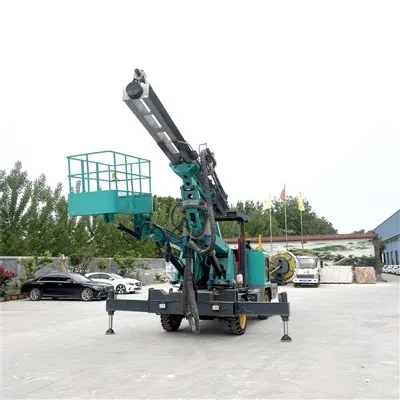
If you’re ready to chat through your specific needs, or just have more questions about the different models and their prices, reach out anytime. Whether you’re a small crew testing the waters or a big company taking on a massive highway project, we’ve got options that fit your budget and your work. Don’t waste time guessing or overpaying — let’s figure out the right guardrail pile driver for you.
Solar Pile Driver References:
- National Association of Construction Equipment Rental and Sales, "2023 Guardrail Pile Driver Market Report"
- Federal Highway Administration, "Guidelines for Guardrail Installation Equipment and Maintenance"
- Construction Equipment Guide, "2024 Price Benchmark for Light to Heavy Construction Machinery"
- International Union of Operating Engineers, "Operator Fatigue and Equipment Design Best Practices"
Jining Tongzhao Machinery Co., Ltd.
Jining Tongzhao Machinery Co., Ltd. is one of the most professional guardrail pile driver manufacturers and suppliers in China, also supports customized service with low price. Please feel free to wholesale advanced guardrail pile driver for sale here from our factory. Contact us for pricelist.
Address: 160 meters north of Hongxiang Road, east of Jiamei Road, Jining Economic Development Zone
E-mail: 13668674521@163.com
WebSite: https://www.cntzmachine.com/
