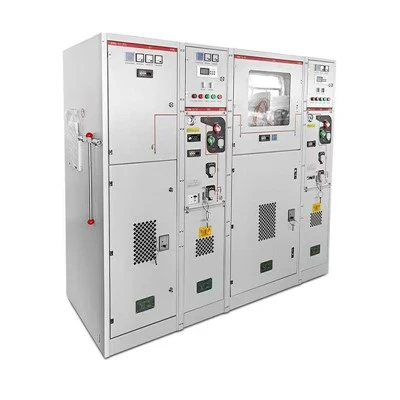
Hey there, if you’ve ever shopped for switchgear—whether you’re a facility manager, electrician, or someone building a new industrial space—you’ve probably seen random numbers and letters attached to products: “Rated 600V,” “IP54,” “Short-Circuit Withstand 40kA.” It’s not just marketing fluff, and as a switchgear supplier, I’m here to break down what all those ratings actually mean, so you don’t overspend on gear you don’t need or cut corners that put your team at risk. Let’s keep this real—no confusing jargon, just what you need to know. Switchgear

First off, let’s start with the basics: switchgear is that big (or sometimes not-so-big) box that controls, protects, and isolates electrical equipment. Think of it as the bouncer for your power system—making sure only the right amount of electricity gets where it needs to go, and shutting things down fast if there’s a fault. Ratings are how we standardize that bouncer’s job, so no matter where you’re located, you know exactly what a piece of gear can handle.
Let’s break down the key ratings you’ll see day-to-day, starting with the ones that matter most for safety and performance.
1. Voltage Ratings: The “How Much Power Can It Handle?” Number
Voltage is the pressure of electricity flowing through wires, and this is non-negotiable—get it wrong, and you’re looking at fried circuits, equipment damage, or even injury. You’ll see two main voltage ratings on any switchgear: Rated Insulation Voltage (Vi) and Rated Operational Voltage (Ue). Let’s keep it simple: Ue is the voltage the gear is designed to work with under normal use. For most commercial or light industrial jobs, that’s 480V, 600V, or 240V. For heavy industry—think factories, mines, or data centers—it can jump to 12kV, 24kV, even 36kV.
Vi, on the other hand, is the insulation’s limit—this is the maximum voltage the switchgear’s materials can handle without breaking down, even during a short surge. A lot of folks mix these two up, but here’s the rule: Vi should always be higher than Ue. For example, if your Ue is 480V, your Vi should be at least 600V. Cheaper gear sometimes skimps on Vi, and that’s a red flag. As a supplier, we never cut corners here—we make sure every piece we send has Vi rated for at least 10% above Ue, just to give an extra buffer.
2. Current Ratings: The “How Much Power Can It Carry?” Number
Current is the amount of electricity flowing through the gear, and this ties directly to what your equipment needs. The two big ones here are Rated Continuous Current (In) and Rated Short-Time Withstand Current (Icw).
In is the steady, everyday current the switchgear can carry without overheating. If you’re powering a 100-amp panel, you need switchgear with an In rating of at least 100 amps—again, we usually go 10-15% higher to account for future upgrades (let’s be real, no one wants to re-do their switchgear 2 years later because they added a new machine).
Then there’s Icw—this is how much current the gear can safely handle for a short period (usually 1 or 3 seconds) during a fault, like a short circuit. Think of a power surge that hits 10,000 amps for half a second—can your gear hold it together? For most commercial spaces, Icw is 10kA to 20kA, but heavy industrial jobs might need 50kA or more. Here’s a common mistake: some suppliers will list a “momentary current” (which is even shorter, like 0.1 seconds) and call it Icw. Don’t fall for that—ask for the exact duration rating, because a 1-second withstand is way more important for preventing fires than a split-second surge.
3. Short-Circuit Withstand Rating: The “Emergency Backup” Number
Wait, I mentioned Icw, but sometimes you’ll see Rated Symmetrical Short-Circuit Withstand Current (Icu). This is the big one for worst-case scenarios: it’s the maximum current the switchgear can interrupt (shut off) completely without breaking. If a fault is bigger than Icu, the switchgear can’t stop it—and that means melted copper, exploded insulators, or even fires.
I’m going to be transparent here: a lot of smaller suppliers will advertise high Icu numbers to look impressive, but those numbers don’t account for how the gear will hold up over time. Our switchgear is tested to meet Icu ratings that match real-world conditions—so it doesn’t just pass a one-time test, it can handle repeated faults. For example, if you’re in a restaurant that uses a lot of ovens and fryers, your Icu needs to be high enough to handle a loose wire that causes a 25kA fault. Skimp here, and you’re setting yourself up for a disaster.
4. Enclosure Ratings: The “What Environment Can It Live In?” Number
This is the stuff you see as IP codes, like IP20, IP54, IP65. IP stands for Ingress Protection, and it tells you how well the enclosure keeps out dust, water, and other gunk. Let’s decode the two numbers: the first is solid protection, the second is liquid.
- IP20: First number 2 means it keeps out fingers (over 12mm thick) and small tools, second number 0 means no water protection. This is fine for inside a clean utility room, but not for a garage or outdoors.
- IP54: First number 5 means it keeps out dust (not totally dust-tight, but enough for most industrial spaces), second number 4 means it resists splashing water from any direction. Great for factories, warehouses, or covered outdoor areas.
- IP65: First number 6 is totally dust-tight, second number 5 means it can handle low-pressure jets of water, like rain or a hose spray. This is for outdoor installations, mines, or places with heavy dust or humidity.
Another enclosure rating you might see is NEMA, which is more common in North America. NEMA 1 is indoor general use, NEMA 3R is outdoor rainproof, NEMA 4X is corrosion-resistant for wet, salty areas like coastal factories. As a supplier, we’ll ask you where the switchgear is going before we even talk specs—you don’t want an IP20 unit outside, or an IP65 unit in a dust-free office (that’s a waste of money).
5. Switching Device Ratings: The “How It Turns On/Off” Number
Inside switchgear, you’ve got breakers, fuses, or contactors, and their ratings matter too. The big ones here are Rated Breaking Capacity (Icn) and Rated Making Capacity (Icm).
Icn is how much current a breaker can safely shut off when there’s a fault. Icm is how much current it can handle when it’s first turning on (closing) during a surge. Icm is usually 2.5 times Icn, so that’s why it’s easy to mix up. For example, a breaker with Icn 20kA will have Icm 50kA. If you’re in a space with frequent power surges (like a building near a substation), you’ll want a higher Icm to prevent the breaker from failing when you turn it on after an outage.
Also, don’t sleep on interrupting types: breakers are either magnetic (good for fast faults) or thermal-magnetic (good for everyday overloads and faults). Fuses are cheaper, but they’re one-and-done—they blow when there’s a fault, so you have to replace them. Circuit breakers are reusable, better for repeat faults, and easier to reset. We’ll help you pick which one fits your budget and needs—no pushy sales talk, just what works.
Common Myths I See All The Time
Let’s bust some myths because I hear these daily as a switchgear supplier:
- “Higher ratings = better gear”: Not always. If your Ue is 240V, a switchgear rated for 600V is overkill, and you’ll pay 20-30% more for no reason. Match the rating to your needs, don’t go for the biggest number just because it looks good.
- “IP65 is always the best”: If you’re mounting switchgear in a dry, climate-controlled room, IP20 is fine. IP65 has extra seals that can trap moisture if not installed right, which is bad.
- “All short-circuit ratings are the same”: As I mentioned earlier, some suppliers lie about Icw or Icu. Always ask for a test report—we keep ours on hand for every unit, and we’re happy to show it to you.
Why This Matters For You
At the end of the day, switchgear isn’t something you want to cut corners on. A bad rating means downtime—if your switchgear fails, you shut down power to your whole factory or office, costing you thousands of dollars an hour. We’ve had customers come to us after a cheap, unrated switchgear failed, costing them a $50,000 repair and 3 days of lost work. We build our gear to match the exact ratings you need, no fluff, no extra cost for stuff you don’t want.
If you’re shopping for switchgear right now, you’re probably juggling budget, compliance (OSHA, NEC, whatever code you follow), and future plans. Don’t stress—just send over what you’re powering, where it’s going, and if you want room to grow, and we’ll hook you up with a recommendation that fits. No hard sells, no confusing fine print, just honest advice from a supplier that’s been doing this long enough to know what works.
If you’re ready to talk specifics, reach out to us to connect and start a procurement conversation. We’ll answer every question, walk you through the ratings, and make sure you leave with gear that’s safe, reliable, and priced right.
Voltage Stabilizer REFERENCES
International Electrotechnical Commission (IEC) 62271-200, High-voltage switchgear and controlgear
National Electrical Manufacturers Association (NEMA) Standards for Enclosures
Occupational Safety and Health Administration (OSHA) Electrical Safety Standards, 29 CFR 1910 Subpart S
National Electrical Code (NEC) Article 409, Switchgear, Switchboard, and Control Assemblies
Wenzhou Mingyue Electric Co., Ltd.
As one of the most professional switchgear manufacturers and suppliers in China, we have world-leading production equipment and strong manufacturing capabilities. Please feel free to wholesale durable switchgear in stock here and get quotation from our factory. We also accept customized orders.
Address: No. 16, Zhongsan East Road, Donghuangyu Village, Liushi Town, Yueqing City, Wenzhou City, Zhejiang Province
E-mail: Hu17687922780@outlook.com
WebSite: https://www.cn-mingyue.com/
