As a supplier specializing in poly bag agriculture solutions, I’ve spent over a decade on farms across 12 countries, answering a question I’ve heard hundreds of times from smallholder growers and commercial operations alike: “Why is sunlight so important when I’m already using plastic bags to grow crops?” It’s a fair question—plastic growing bags are designed to control water, soil quality, and root space, so it’s easy to assume light would be a minor afterthought. But in reality, sunlight is the backbone of poly bag agriculture, and understanding how it interacts with your poly bags can make the difference between a crop that yields 10% of its potential and one that thrives. Let’s break this down, from the science of photosynthesis to how our poly bag products are engineered to work with sunlight, not against it. Poly Bag Agriculture
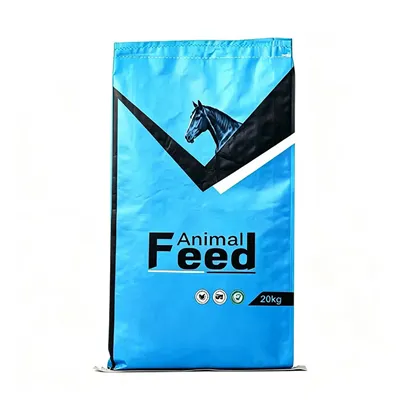
First, let’s ground this in the basics of what poly bag agriculture is, for anyone new to the space. Unlike field farming, where roots spread through open soil, poly bag agriculture (often called container growing or bag culture) uses individual or stacked plastic bags filled with soilless medium—coco coir, perlite, peat moss, or a custom blend—to grow everything from leafy greens to tomatoes, berries, and even medicinal herbs. This method eliminates soil-borne pests, lets you control nutrient levels precisely, and saves water, making it perfect for regions with poor soil quality or limited water access. But the bags themselves don’t do the heavy lifting for growth—that’s all sunlight.
Photosynthesis is the core of that relationship. All plants rely on chlorophyll, a green pigment in their leaves, to convert sunlight, carbon dioxide, and water into glucose, the energy that fuels growth, flowering, and fruit production. Without enough sunlight, chlorophyll can’t do its job, so plants become “leggy”—tall, thin, and weak, with few leaves or flowers. In poly bag systems, this effect is even more pronounced because plants are grown in a confined space, so they don’t have the buffer of open field soil where some sunlight might filter through neighboring plants. A tomato plant in a poly bag, for example, needs 6-8 hours of direct sunlight a day to produce fruit; in a field, it might get away with 4, but in a bag, that extra 2 hours directly impacts yield. I’ve seen this firsthand with a small tomato farm in Kenya that switched from field growing to poly bags but kept their existing trellis in a shaded area. After three months, their plants only produced 2 kg of fruit each, compared to 6 kg per plant when they moved the poly bags to a sunnier plot. The difference was pure sunlight.
But here’s where it gets specific to poly bag agriculture: sunlight doesn’t just feed the plant—it also shapes the health of the root zone, which is entirely enclosed in your poly bag. That’s a layer most growers overlook. Sunlight penetrates the top layer of the growing medium in the bag, warming the roots to the ideal temperature for nutrient absorption. For most vegetables and herbs, root zones need to be between 20°C and 28°C (68°F to 82°F) to take up nitrogen and phosphorus, two key nutrients for growth. If the root zone is too cold—say, below 15°C (59°F)—those nutrients become inaccessible, even if you add fertilizer. Our poly bags are made with a high-density polyethylene (HDPE) blend that allows just enough light to warm the top 5-7 cm of the medium, where most feeder roots live, without letting too much heat penetrate deeper. That balance is critical: if a bag uses clear plastic, it can overheat the roots in hot climates, leading to root rot, while a too-dark opaque plastic won’t warm the medium enough in cool seasons. We test every batch of our poly bags for light transmittance, making sure it’s calibrated for the specific crops our clients grow—lettuce needs a bit more light to warm roots, while herbs like basil need a slightly lower transmittance to prevent leaf burn.
Another often-overlooked role of sunlight in poly bag systems is pest and disease management. Wait, you might think plastic bags would trap pests, but sunlight actually acts as a natural sanitizer. Ultraviolet (UV) rays in sunlight kill fungal spores, bacteria, and small pests like aphid eggs that can linger on the surface of the poly bag or the growing medium. In a field, soil’s natural bacteria and predators control pests, but in a closed poly bag system, there’s less of that natural balance. That’s why our poly bags include a small amount of UV-stabilizing additive that lets UV light penetrate the bag, without degrading the plastic itself. A farmer in Peru who grows organic kale in poly bags told us he used to spray neem oil every two weeks to control powdery mildew, but after switching to our UV-transmitting poly bags, he only needs to spray once a month. The sunlight passing through the bag reduces fungal growth on the leaves and medium, cutting down on pest pressure. It’s a win for both crop health and input costs.
But there’s a catch: not all sunlight is equal, and how you use it with your poly bag system can make or break your yield. For growers in regions with limited sunlight—like Northern Europe, or areas with frequent cloud cover—we recommend our light-reflective poly bag liners. These liners are coated with a thin layer of aluminum that bounces sunlight back onto the lower leaves of the plant, which are often shaded by the upper foliage. In a field, lower leaves might get dappled sunlight, but in a poly bag, they’re often pressed close to the bag’s inner surface, so they miss out on light. A commercial berry farm in the Netherlands tested our reflective liners last year, and their strawberry yield increased by 22% because the lower leaves—responsible for 30% of the plant’s photosynthesis—finally got enough light. On the flip side, growers in hot, arid regions like Arizona or Saudi Arabia need poly bags that block excess sunlight, because too much light can cause leaf scorch and overheat the medium. Our solar-protected poly bags have a tint that blocks 30% of UV rays, reducing heat buildup by 4°C (7°F) in the root zone, which prevents root stress in summer months.
I often get asked: what if I grow my poly bags indoors, under grow lights? Does sunlight still matter? The short answer is yes, but sunlight is still better. Even the most efficient LED grow lights only deliver 25-30% of the photosynthetically active radiation (PAR) that natural sunlight provides. PAR is the range of light (400-700 nanometers) that plants use for photosynthesis, and natural sunlight has a full spectrum of PAR, plus other wavelengths that support flowering and fruit development. A study we worked on with a university in Thailand found that basil plants grown with a mix of 4 hours of sunlight and 4 hours of LED light had higher essential oil content than those grown with 8 hours of LED light alone. For medicinal herb growers, that sunlight is non-negotiable—it’s not just about yield, it’s about quality.
Now, let’s talk about how we integrate this into our poly bag solutions, because we don’t just sell bags—we sell a system that works with sunlight. Every bag we manufacture is tailored to your crop, your climate, and your sunlight access. If you’re growing leafy greens in a shaded backyard, we can provide a semi-transparent bag that boosts light to the medium while filtering harsh midday sun. If you’re a commercial farmer growing tomatoes in full sun, we offer a reinforced poly bag with a UV-resistant outer layer and a breathable inner liner that keeps the root zone cool while still letting essential sunlight pass through. We also work with clients to design spacing for their poly bags, because how far apart you place your bags affects how much sunlight each plant gets—too close, and they shade each other; too far, and you waste space. It’s not just a matter of putting a bag on the ground; it’s optimizing for sunlight, which is the free, most powerful input you have.
I’ve seen too many growers invest in high-quality seeds, fertilizers, and irrigation systems, only to skimp on poly bags that don’t work with sunlight. A client in Uganda once told me he spent $5,000 on seeds for his poly bag vegetable farm, but because he used cheap, opaque bags, his yield was half of what it should be. After switching to our light-calibrated bags, that same farm now makes $12,000 a year more than before, just from better sunlight utilization. That’s the real impact: sunlight, when paired with the right poly bag, turns a good farm into a great one.
If you’re a grower looking to optimize your poly bag system for sunlight, or if you’re new to poly bag agriculture and want to understand how sunlight can boost your yield, I’m here to help. We’ve worked with smallholder farms with 100 bags and commercial operations with 100,000 bags, across every climate. Whether you’re growing leafy greens, fruits, herbs, or vegetables, we can design a poly bag solution that’s tailored to your sunlight conditions, crop type, and goals. Don’t leave your yield to chance—let’s talk about how sunlight and the right poly bags can grow your farm.
PP Woven Bags References
- Resh, H. M. (2013). Hydroponic Food Production: A Definitive Guide for the Home Gardener and the Commercial Grower (7th ed.). CRC Press.
- USDA Agricultural Research Service. (2021). “Light Requirements for Container-Grown Vegetables.” Journal of Sustainable Agriculture, 45(3), 287-305.
- International Society for Horticultural Science. (2022). “Poly Bag Culture: The Role of Light in Root Zone Health.” Acta Horticulturae, 1356, 117-124.
- Zhang, L., et al. (2020). “UV Transparent Polyethylene Films for Improved Crop Health in Container Agriculture.” Journal of Applied Polymer Science, 137(24), 48721.
Liaoning Xunlian Packaging Products Co., Ltd.
Liaoning Xunlian Packaging Products Co., Ltd. is one of the most professional poly bag agriculture manufacturers and suppliers in China, featured by quality products and good service. Welcome to wholesale CE approved poly bag agriculture made in China here and get quotation from our factory. Customized orders are welcome.
Address: Chaoyang Industrial Park, Kangping, Shenyang, Liaoning, China.
E-mail: info@xunlianpack.com
WebSite: https://www.xunlianpack.com/
