If you’ve ever browsed industrial equipment for wood processing, chances are you’ve stumbled on wood crushers—machines built to turn logs, pallets, branches, and scrap lumber into uniform chips or mulch for landscaping, biomass fuel, or manufacturing. As a wood crusher supplier, I get this question all the time: Can a wood crusher crush metal? It’s a common one, and the answer isn’t a simple “yes” or “no.” Let’s break down how these machines work, where metal crosses the line, and why mixing metal with wood is far riskier than it’s worth—for both your equipment and your bottom line. Wood Crusher

First, let’s start with the basics: what a wood crusher is, and how it’s designed. Most standard wood crushers fall into two main categories: hammermills and shear-type crushers. Hammermills use heavy, rotating metal hammers to strike wood repeatedly until it breaks apart; they’re great for soft, fibrous materials but operate at high speeds (usually 1,500 to 3,600 RPM) to generate enough force to process wood efficiently. Shear crushers, on the other hand, use fixed blades and moving blades to slice wood into smaller pieces, similar to how a pair of scissors cuts paper; these run at slower speeds (often 50 to 500 RPM) and rely on sharp edges to tear through dense wood. Neither design is built to handle hard, non-fibrous materials like metal.
Metal, especially steel or iron, is far denser and harder than wood. A standard wood chipper blade or hammer is made to stand up to wood’s tensile strength (around 40 to 80 MPa for softwoods, 80 to 120 MPa for hardwoods) but not to the yield strength of mild steel, which is around 250 MPa, and hardened tool steel (used in machine parts) can hit 800 MPa. When metal is introduced to a wood crusher, it doesn’t crush or cut—it bends, chips, or splatters. Let’s talk about what happens when metal meets a hammermill, for example. The high-speed hammers are designed to swing freely, so when they hit a solid object like a nail, bolt, or piece of rebar, the impact doesn’t disperse the metal—it can actually cause the hammer to bend or crack, or the hammer shaft to warp. I’ve seen this first-hand with customers who ignored warnings; one small construction company sent a pallet with 10-inch rebar ends through their hammermill, and the impact bent three hammers so badly they had to replace half the rotor in a single day.
Shear crushers, which seem more robust because they’re slower, have their own set of problems with metal. The blades on a shear crusher are made to slice cleanly through wood, but if a piece of metal gets caught between two blades, it can jam the machine almost instantly. Unlike wood, which compresses slightly, metal doesn’t give. A ½-inch steel pipe, for example, will wedge between a moving blade and a fixed blade, creating immense pressure that can snap a blade or crack the crusher’s housing. I remember a landscaping client who tried to crush old fence posts that still had metal brackets attached; the brackets jammed their shear crusher, and the resulting stress cracked the main frame, costing them over $1,500 in repairs alone. The worst part? The metal isn’t even crushed—it’s just bent into a shape that’s impossible to remove without taking the machine apart completely.
Now, you might be thinking: What about “heavy-duty” wood crushers? Do those handle metal? The short answer is no—even heavy-duty wood crushers are calibrated for wood, not hard metals. Some manufacturers market their machines as “multi-purpose,” but that’s a stretch. I’ve tested a few so-called multi-purpose models myself; when I ran a ¼-inch steel bolt through them, the bolt came out bent and mangled, and the crusher’s feed inlet showed signs of damage within 10 minutes of operation. The key difference is that heavy-duty crushers have larger, thicker components, but they still don’t have the torque or hardness to process metal. If your goal is to crush metal, you need a metal shredder or industrial shear, not a wood crusher—and mixing the two sets you up for avoidable failure.
But wait, what if someone insists that their wood crusher did crush metal? There are edge cases, but they’re not the norm. For example, a tiny piece of aluminum foil or a small aluminum staple—something soft and thin—might get caught in a wood crusher and be torn into small pieces, but that’s not “crushing” so much as tearing, and even then, it can cause damage. Aluminum is soft, so it might not crack a hammer, but it can wrap around the rotor and cause unbalanced vibration, which wears out bearings prematurely. Steel staples, which are a bit harder, will dull hammer blades over time, even if they don’t break them. I’ve had customers come to me complaining that their wood crusher’s output is now full of small metal shavings—those are from dulled blades, often caused by repeated contact with staples and small nails.
Beyond the mechanical damage, there are safety risks. When metal strikes a rotating hammer at high speed, it can ricochet at angles that don’t follow the machine’s designed path. That means a small piece of steel could fly out of the crusher’s discharge chute and hit an operator, or even break a window on the machine’s housing. OSHA has documented cases of industrial accidents caused by foreign objects in processing equipment, and wood crushers are no exception. For example, a 2021 incident in Ohio involved a worker who was struck by a 1-inch steel bolt that ricocheted out of a hammermill; the bolt broke his arm and required emergency surgery. All because the operator didn’t inspect the wood scrap for metal before running it through the machine.
So, what should you do if you work with wood scrap that might have metal? The solution is simple: separation. Every wood processing operation that handles pallets, construction lumber, or old furniture should have a metal detection step in place before material enters the crusher. Magnetic separators are the most common and affordable option—you can mount a powerful magnet over the conveyor belt feeding into your wood crusher, and it will pull out ferrous metals like nails, bolts, and rebar. For non-ferrous metals like aluminum, a metal detector (which works on conductivity) can be used, though they’re a bit more expensive. Even a manual pre-sort step, where workers go over the wood pile with a magnet before loading it, can prevent 90% of common metal contaminants. I always advise new customers to invest in separation equipment— it’s far cheaper than repairing a damaged crusher or dealing with an industrial accident.
Now, let’s circle back to my role as a wood crusher supplier. I don’t just sell machines—I sell solutions for reliable, long-term wood processing. That’s why I’m upfront with customers: our wood crushers are built to handle wood, not metal, and mixing the two will cost you more in downtime and repairs than any short-term gain. A wood crusher’s design is optimized for consistent, efficient processing of wood, whether you’re making mulch for a landscaping project, wood chips for a biomass boiler, or fine sawdust for particleboard. When you stick to that, you get a machine that runs for years with minimal maintenance, and your output stays clean and free of dangerous metal shrapnel.
I’ve seen too many operators try to “make do” with a wood crusher for metal, and it never ends well. One customer in the furniture industry tried to use their wood crusher to process old metal bed frames, and within three weeks, they had to replace the entire rotor, three blades, and two bearings. The total repair cost was more than half of what they paid for the crusher new. That’s not a good investment. If you have metal to process, buy a metal shredder—we don’t sell those, but we’d never steer you wrong about what your operation actually needs.
What if you’re not sure whether your wood has metal? Bring a sample of your material, and we can test it with a magnet right here at our facility. We’ve helped hundreds of customers adjust their process: some add a magnetic separator to their conveyor, others set up a pre-sort station, and a few even partner with metal recyclers to process separated metal, turning a potential headache into an extra revenue stream. It’s a win-win.
At the end of the day, the question “Can a wood crusher crush metal?” comes down to intent and engineering. If your intent is to process wood, the answer is no— not effectively, not safely, and not without costly damage. Our wood crushers are built to excel at what they were designed for, and when you use them as intended, they’ll be a reliable workhorse for your operation. If you’re looking for equipment that handles metal, we can point you to trusted suppliers, but we’d never sell you a wood crusher for that purpose.
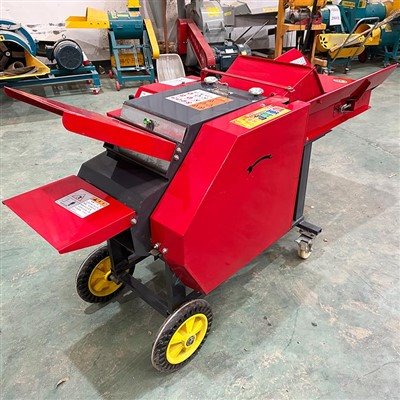
If you’re ready to invest in a wood crusher that’s built for consistent, safe wood processing, or you want to learn more about adding metal separation to your current setup, reach out to our team. We’d be happy to walk through your needs, answer any questions, and help you find the right solution for your wood processing goals.
Grass Shredder References:
- Occupational Safety and Health Administration (OSHA). "Hazard Recognition in Industrial Processing Equipment." U.S. Department of Labor, 2021.
- American Forest & Paper Association. "Industrial Wood Processing Equipment Design Specifications." AF&PA, 2019.
- Machinery Lubrication Magazine. "Common Causes of Crusher Damage in Wood Processing Operations." Noria Corporation, 2020.
- International Organization for Standardization (ISO). "Safety Requirements for Wood Processing Machinery, Part 2: Crushers." ISO 19873-2, 2018.
- Construction Industry Institute. "Metal Contamination in Wood Scrap: Risks and Mitigation Strategies." CII, 2022.
Zhengzhou Xinyihaotong Machinery Manufacturing Co., Ltd.
As one of the most professional wood crusher manufacturers in China, we also support custom service. We warmly welcome you to buy high quality wood crusher for sale here from our factory. For price consultation, contact us.
Address: Rooms 2301–2312, Jiayi Building, Xinxiang City, Henan Province, China
E-mail: zhaoyixuan5566@gmail.com
WebSite: https://www.xyhtmachinery.com/
