If you’ve ever worked with injection molding, you’ve probably heard someone mutter “tolerance” like it’s a magic word—one that can make or break a part, a production run, or even a client’s entire project. But if you’re new to single shot injection molding, that term can feel like a puzzle: What does it actually mean for parts made in a single cycle, with no secondary operations? As a single shot injection molding supplier, I’ve spent the last 12 years fielding this question every single week, from automotive engineers to medical device designers to consumer product startups. Today, I want to pull back the curtain on what tolerance in single shot injection molding really is, how it works, and why getting it right matters more than most people realize. Single Shot Injection Molding

First, let’s cut through the jargon. Tolerance is simply the acceptable range of variation for a part’s dimension, shape, or feature. For example, if a client needs a plastic pin that fits perfectly into a slot, we can’t make it exactly 5.00mm wide—machines and materials shift too much. Instead, we agree that the pin can be between 4.98mm and 5.02mm wide; that range is its tolerance. Now, single shot injection molding is different from other processes, and that difference changes everything when it comes to tolerance. Unlike dual-shot molding (which uses two materials in one mold) or insert molding (which adds a metal part mid-cycle), single shot uses one material, one mold, and one continuous cycle to make a complete part. No extra steps mean fewer variables, but it also means every single part is shaped, cooled, and ejected in exactly the same window—so tolerance here depends on balancing machine precision, material behavior, and mold design, all at the same time.
Let’s start with the biggest factor that shapes tolerance in single shot molding: the machine itself. A lot of first-time clients assume all injection molding machines are the same, but that’s like comparing a high-end espresso machine to a basic coffee pot. For single shot molding, we use hydraulic or all-electric machines with precision controls that can adjust shot size, pressure, and temperature to within fractions of a percentage point. For small, high-precision parts—like the tiny plastic gears in a hearing aid, for example—we use machines with toggle clamps that can hold mold alignment to within 0.01mm. If the mold is even a hair off, the part’s wall thickness will vary, and its tolerance will be impossible to hit. On the other end, for large parts like outdoor patio furniture, we use larger machines with slightly wider tolerance ranges, because the parts are bigger and minor variation is less noticeable. I always tell clients: “You get what you pay for in a machine, and when it comes to tolerance, that’s never truer.”
Next up: material behavior. This is where single shot molding gets tricky, because plastic isn’t metal. It heats up, cools down, shrinks, expands, and flows in ways that are predictable but not perfect. Every plastic resin has a “shrink rate”—the amount it shrinks as it cools from a molten liquid to a solid part. For single shot parts, we calculate that shrink rate before we even build the mold, so the mold cavity is slightly larger than the final part needs to be, to account for shrinkage. But here’s the catch: shrinkage varies based on temperature, pressure, and even the color of the plastic. Additives like UV stabilizers or pigments can change shrinkage by 10% or more, which throws tolerance right off. For example, a client once came to us needing 10,000 custom plastic bottle caps in a bright blue pigment. Their first mold, made using the natural resin’s shrink rate, produced caps that were 0.3mm too narrow—too small to seal the bottles. When we adjusted the mold to account for blue pigment’s higher shrink rate, every cap hit their 0.05mm tolerance range perfectly. That’s the kind of small, material-specific adjustment that separates a good single shot supplier from a great one.
Mold design is the third critical piece of the tolerance puzzle, and it’s where most clients underestimate the work. A mold isn’t just a block of metal with a shape cut into it; it’s a precision tool that has to be machined to within thousandths of a millimeter, then polished and inspected to make sure every feature is aligned. For single shot molding, the mold’s gate—the point where molten plastic flows into the cavity—matters a lot. A gate that’s too large can cause warping as the part cools unevenly, while a gate that’s too small can create a flow mark that throws off dimension. We also use cooling lines in the mold that run in precise patterns, so the part cools evenly across its entire surface. If one section of the mold cools faster than another, that section shrinks more, leading to a warped part that’s way outside tolerance. Last year, we worked with a medical device startup making plastic surgical handles. Their first mold had cooling lines that only ran along the outer edges of the cavity, so the central grip area cooled 20% faster than the rest. The handles came out warped, with grip dimensions 0.8mm off their required tolerance. We redesigned the mold with dual cooling lines, adjusted the cycle time to slow cooling, and every subsequent part hit their strict 0.03mm tolerance requirement—no rework, no scrap, no missed deadlines. That’s the value of a mold designed for tolerance, not just shape.
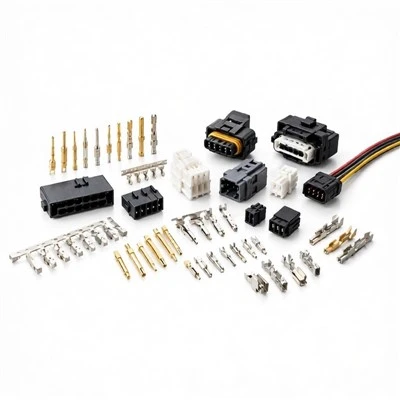
Now, let’s talk about the numbers, because tolerance isn’t just theoretical. In single shot injection molding, tolerance ranges are usually expressed in millimeters, and they vary widely depending on part size and feature type. For small, intricate parts (less than 50mm in total length), we can consistently hold tolerances of ±0.05mm to ±0.1mm. That’s the kind of precision needed for parts like electronic connectors, where even a 0.1mm difference can mean the part doesn’t fit into a circuit board. For medium parts (50mm to 300mm), tolerance ranges tend to widen to ±0.1mm to ±0.3mm, because larger parts have more area for variation. Large parts (over 300mm), like automotive bumper trim or large storage bins, have the widest tolerance ranges, usually ±0.3mm to ±0.8mm. Of course, these are general guidelines—some clients need tighter tolerances, and we can adjust our processes to meet them, as long as it’s cost-effective. A common mistake I see startups make is asking for a tolerance of ±0.01mm on a 1-meter long part. That’s technically possible, but it would require special machines, custom materials, and weeks of extra setup time, making the part prohibitively expensive. Our job as a supplier is to tell clients what’s realistic, and work with them to balance their needs for precision and cost.
Another key point about tolerance in single shot molding: consistency. A lot of people think “tolerance” is just about the first part coming off the machine, but it’s about every part, 10,000 or 100,000 or 1,000,000 parts in a row. We do two things to ensure consistency. First, we have a strict process for machine and mold maintenance: every week, we calibrate our injection pressure and temperature controls, and every month, we take the mold off the machine to inspect for wear. Even a tiny amount of wear on the mold cavity (from thousands of shots of plastic) can add 0.02mm to a part’s dimension over time. Second, we use statistical process control (SPC) to track every part’s dimensions as it comes off the line. If we see a trend—like parts getting 0.01mm wider over 500 shots—we can adjust the machine’s parameters mid-run, instead of waiting until we have a whole batch of out-of-tolerance parts to scrap. Last year, we had a client making 50,000 plastic housings for smart thermostats, with a tolerance of ±0.08mm for the mounting holes. Our SPC system noticed a 0.03mm shift in hole size after 2,000 shots, traced it to a small amount of wear in the mold’s core pin, and adjusted the machine’s injection pressure to compensate. We didn’t scrap a single housing, and the client received every part within their tolerance range. That’s the kind of reliability that keeps clients coming back.
Of course, there are limits to tolerance in single shot molding, and it’s important to be transparent about those. No process is perfect, and even with the best machine, material, and mold, you can’t hold a tolerance tighter than ±0.02mm on very thin walls (less than 1mm thick), because those walls cool and warp too quickly. And for parts with complex undercuts (features that stick out or go in, so you have to pull them out of the mold), tolerance can be harder to control because the mold has moving parts that add another layer of variation. We always work with clients early in the design process to adjust parts for single shot molding’s tolerance limits—small tweaks like rounding sharp corners or simplifying undercuts can save thousands of dollars in tooling and production costs, without sacrificing part function.
I’ve seen too many clients struggle with tolerance in single shot molding because they treat it as an afterthought, not a core part of the design and production process. A few months ago, a small automotive parts shop sent us a design for a plastic brake fluid reservoir, with a tolerance of ±0.05mm on the neck that connects to the cap. They had already built their own mold, and the first 1,000 parts were 0.12mm off tolerance, so they were scrapping them at a cost of $2 per part. When we looked at their mold, we found that their cooling lines were only on one side of the cavity, and they had used a general-purpose resin without accounting for the reservoir’s polypropylene’s shrink rate. We reworked their mold’s cooling system, adjusted the machine’s cycle time, and their tolerance went from 0.12mm off to ±0.06mm within three days. They ended up using 80% of their original mold investment, instead of scrapping it, and saved over $100,000 in the process. That’s the value of working with a supplier that understands tolerance, not just injection molding.
At the end of the day, tolerance in single shot injection molding isn’t just a number on a drawing—it’s the difference between a part that works and a part that fails, between a production run that’s on time and on budget, and one that’s full of delays and scrap. As a single shot injection molding supplier, our job isn’t just to make parts—it’s to help clients navigate the balance between their design needs, their budget, and the real limits of what single shot molding can deliver. If you’re working on a project that requires precision plastic parts, and you want to talk through your tolerance needs, our team is here to help. Whether you’re a startup prototypeing a new product, a manufacturer scaling up production, or an engineer refining an existing design, we can provide the expertise, the equipment, and the consistency to get your parts within tolerance, every time.
Two Shot Injection Molding For more information on single shot injection molding tolerance and best practices, refer to:
- Injection Molding Handbook, Rosato, D.V. and Rosato, M.G.
- Plastics Materials and Processes: A Concise Encyclopedia, Harper, C.A.
- Design for Manufacturability for Injection Molding, Groover, M.P.
Guangdong GaoGlo Technology Co., Ltd.
Guangdong GaoGlo Technology Co., Ltd. is one of the most professional single shot injection molding manufacturers and suppliers in China, featured by quality products and good price. Please rest assured to buy advanced single shot injection molding made in China here and get quotation from our factory. Welcome to contact us for custom service and OEM&ODM service.
Address: Yongshi Avenue, Shiwan Town, Boluo County, Huizhou City, Guangdong Province
E-mail: info@gaoglofactory.com
WebSite: https://www.gaoglofactory.com/
