Hey there lab folks, let’s cut to the chase—if you’ve ever wondered what that flashy, high-speed lab machine your PI keeps muttering about even does, you’re in the right spot. As a lab instruments supplier, I’ve spent years walking researchers through why an ultracentrifuge isn’t just a souped-up regular centrifuge, and why skipping it can kill months of work on everything from cancer research to biotech manufacturing. Let’s break this down like we’re chatting over coffee after a long day of pipetting. Laboratory Instruments
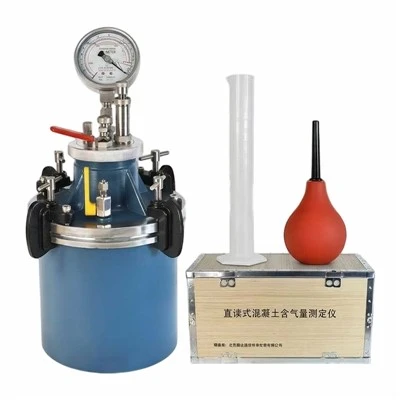
First, let’s get the basics straight: a regular benchtop centrifuge spins at maybe 4,000 to 10,000 RPM, right? It’s great for pelleting cells, spinning down blood samples, or separating larger stuff. But an ultracentrifuge? That thing cranks up to 100,000+ RPM—sometimes way higher, even 150,000 RPM or more. The g-force (that’s the force pulling samples to the bottom of the tube?) tops out at like 1,000,000 x g for the high-end models. Regular centrifuges max out around 10,000 x g, so yeah, this is a whole different league.
But what do you actually use that kind of speed for? Let’s start with the big one that a lot of people first hear about: separating tiny, fragile biological molecules or particles that regular centrifuges can’t budge. Think about stuff like proteins, viruses, nucleic acids, or even small organelles like mitochondria. If you’re studying how a new drug interacts with a protein, you need to isolate that pure protein from a soup of cell debris, other proteins, fats, and whatever else is in your cell lysate. A regular centrifuge won’t pull those tiny proteins out fast enough, or they’ll stay suspended instead of pelleting at the bottom of the tube. The ultracentrifuge’s insane g-force slams those particles down so you can collect them, no messy extra steps needed.
Wait, and it’s not just pelleting—there’s two main types of ultracentrifugation, right? Differential and density gradient. Let’s talk about differential first because that’s the most common for quick prep. Differential centrifugation uses different spin speeds and times to separate components based on size and density. Like, if you want pure mitochondria from cells, you first spin your lysate at a low speed (like 1,000 x g) to pull down whole cells and nuclei, leave the supernatant. Then you spin that supernatant at 10,000 x g to get mitochondria, spin the next supernatant higher for smaller stuff like peroxisomes, and so on, until you get to tiny proteins or viruses at the highest speeds. That’s how researchers get the pure organelles or molecules they need for downstream tests, like Western blots or mass spec.
Then there’s density gradient ultracentrifugation, which is next level. This is when you layer a sample on top of a gradient of a dense substance—things like sucrose, cesium chloride, or iodixanol. The gradient gets heavier from top to bottom, so when you spin, particles move until they hit a spot where their density matches the gradient liquid. That lets you separate particles that are almost the same size but different density—like separating different types of viruses, or even different forms of a protein (like folded vs. misfolded ones that can cause diseases like Alzheimer’s). I’ve had customers working on COVID back in 2020 use this to isolate intact viral particles from cell culture, because they needed pure virus to test vaccine candidates. That stuff is only possible with an ultracentrifuge—no other lab machine can do that kind of precise separation.
Now, let’s cover some real use cases across different fields, because ultracentrifuges aren’t just for molecular biology labs. Let’s start with biotech and pharma. A lot of biopharma products are proteins or antibodies, right? To make a monoclonal antibody drug, you have to isolate it from mammalian cell culture, and ultracentrifugation is a key step in purifying that antibody to get rid of any unwanted proteins or cellular debris. Also, lipid nanoparticles (LNPs) — those are the tiny bubbles that carry mRNA in mRNA vaccines like the Pfizer and Moderna ones. To make sure your LNPs are the right size and pure, you use an ultracentrifuge to separate them from leftover reagents. Without that step, the vaccine wouldn’t work correctly, or could cause bad side effects. That’s how critical these machines are—they’re behind some of the biggest medical advances of the last 15 years.
Then there’s virology. We touched on viruses earlier, but let’s go deeper. Researchers studying viral replication, viral structure, or antiviral drugs need pure, intact virus particles. Some viruses are really small—like HIV is only about 120 nanometers across. A regular centrifuge can’t pull those tiny particles out quickly enough, and they’ll degrade before you can collect them. Ultracentrifuges spin fast enough to pellet whole viruses in minutes, and density gradient centrifugation lets you separate one type of virus from another, or even separate viral genomes from capsid proteins. I’ve worked with a lab that’s studying avian flu—they use ultracentrifugation to isolate virus samples from wild bird feces so they can sequence the viral genome and track mutations. That’s public health stuff, happening every day, all because of that one machine.
Another big area: cell and molecular biology, specifically for things like protein complexes and chromatin. A lot of proteins don’t work alone—they form big complexes, like the ribosome, or the proteasome, or transcription factors that bind DNA. To study how these complexes assemble or function, you need to isolate them intact. If you just use a regular centrifuge, those big complexes might break apart, or you can’t separate them from smaller proteins. Ultracentrifugation lets you spin slow enough (wait, right—some ultracentrifuges can do low speeds too, it’s not all high RPM) to keep big complexes intact, or use density gradients to separate complexes of different sizes. For example, if you’re studying a protein that’s linked to a genetic disease like cystic fibrosis, you can use ultracentrifugation to see how it binds to other proteins in the cell, which tells you how the disease develops.
Wait, there’s even environmental science and nanotechnology! I know, that’s a little unexpected, but hear me out. Environmental scientists study microplastics and nanoplastics in water and soil. Nanoplastics are tiny, less than 1000 nanometers, and they’re super hard to separate from other tiny particles in environmental samples. Ultracentrifuges can spin samples to pellet the nanoplastics, separate them from clay particles or organic matter, so researchers can study how they move through the environment and what effects they have on wildlife. Nanotech researchers use ultracentrifugation to make and test nanoparticles for things like drug delivery or solar cells—they can control the size of the nanoparticles by adjusting the spin speed, which is key to making them work as intended.
Now, let’s get real about why so many researchers tell me they can’t live without their ultracentrifuge. Sure, benchtops are cheaper, but for high-stakes work, you need that speed and precision. Let’s be honest: if you mess up your sample prep because you used a regular centrifuge, you just wasted weeks of work, not to mention the cost of reagents and cell cultures. An ultracentrifuge lets you get clean, pure samples the first time, which saves so much time and stress.
But wait, it’s not just buying a machine and that’s it—there’s a lot to consider too. Different ultracentrifuges have different rotors, right? Fixed-angle rotors, swinging-bucket rotors, vertical rotors—each is for a different job. Fixed-angle is good for pelleting, swinging-bucket is good for density gradients because the sample forms a nice sharp band, vertical rotors spin really fast for quick separations. You also have to think about the sample volume—do you need to spin 1mL of precious sample, or 100mL of bulk prep? Also, safety is huge here—ultracentrifuges spin so fast that if a tube breaks, the rotor can come loose and cause serious damage. A lot of good suppliers (like us) make sure to sell models with built-in safety features, like rotor imbalance detectors, temperature control (some samples are heat-sensitive, so you need to spin at 4C), and automatic shutoff if something goes wrong.
A lot of new labs or young researchers might not realize that ultracentrifuges aren’t just for big pharma or elite universities. A small university lab, a startup biotech, even a government research lab can benefit from having one. I’ve worked with a small startup that’s developing a new cancer drug—they used an ultracentrifuge to purify their drug candidate, and that’s what got them their first round of funding. So it’s not just for big names, it’s for anyone doing work that needs pure, small particles.
Now, if you’re reading this and you’re thinking, “Wait, do I need an ultracentrifuge for my work?” Let’s be straight: if you’re isolating proteins, viruses, organelles, LNPs, nanoplastics, or any particles smaller than, say, 1 micrometer, yeah, you probably do. If you’re just spinning down blood or pelleting E. coli, a regular centrifuge is fine. But for anything that’s tiny, fragile, or needs precise separation, ultracentrifugation is non-negotiable.
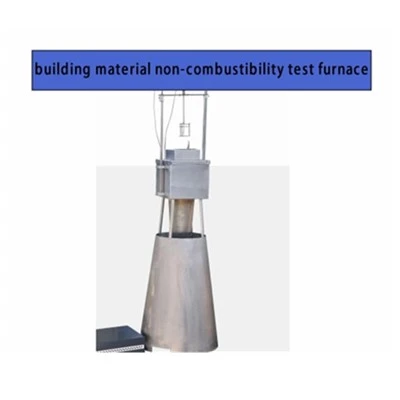
At the end of the day, this is the kind of lab instrument that’s behind almost every major discovery in modern biology and medicine. It’s not flashy, it doesn’t get the same press as CRISPR or mRNA vaccines, but it’s the workhorse that makes all that research possible. We’ve been supplying lab instruments for years, and we’ve helped everything from small academic labs to large biopharma companies get the right ultracentrifuge for their specific needs. If you’re looking to upgrade your lab’s capabilities, or you’re not sure which model would work best for your experiments, don’t hesitate to reach out to us to talk through your requirements. We’re here to help you find the right fit for your work, no matter how big or small your project is.
Analyzing Instruments References
- Alberts, B., Johnson, A., Lewis, J., Raff, M., Roberts, K., & Walter, P. (2015). Molecular Biology of the Cell (6th ed.). Garland Science.
- Graham, J. M., & Rickwood, D. (Eds.). (2001). Centrifugation Biology: A Practical Approach (3rd ed.). Oxford University Press.
- Crouch, E. C., et al. (2019). Ultracentrifugation: A versatile tool for nanomaterial separation and characterization. Journal of Nanoparticle Research, 21(12), 258.
- Pauszek, S. J., et al. (2021). Ultracentrifugation for the purification of COVID-19 vaccine-related lipid nanoparticles. Current Protocols, 1(1), e204.
- Wagner, J., et al. (2018). Isolation of intracellular organelles using differential and density gradient ultracentrifugation. Current Protocols in Cell Biology, 80(1), 3.1.1–3.1.22.
Hebei Wanluda Testing Instrument Equipment Co., Ltd.
As one of the most professional laboratory instruments manufacturers and suppliers in China, we have world-leading production equipment and strong manufacturing capabilities. Please rest assured to buy advanced laboratory instruments made in China here from our factory.
Address: Zhouguantun Village, Xian County, Cangzhou City, Hebei Province, P.R.China
E-mail: wldinstrument@163.com
WebSite: https://www.wldinstrument.com/
