Hey there, if you’ve ever had to spec out a dry type transformer for a commercial building, data center, or factory upgrade, you’ve probably wondered: “What’s the actual weight of a 100 kVA dry type transformer?” It’s not a random number we pull out of thin air—there’s a lot that goes into that, and as a dry type transformer supplier, I’m breaking this down like I’d talk to a buddy who’s trying to avoid overpaying or scrambling for a forklift last minute. Dry Type Transformer
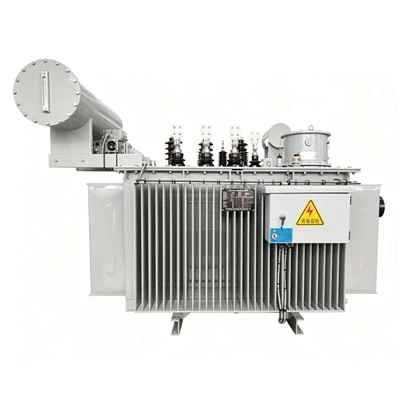
First, let’s get one thing straight: “100 kVA” is a rating, not a size, and weight isn’t one-size-fits-all. It depends on what the transformer’s made for, right? Dry type transformers don’t use mineral oil like liquid-filled ones—they’re air-cooled, so they’re lighter than their oil-cooled cousins, but their weight still shifts based on a handful of key specs. As someone who’s sold these things for years, I can tell you that most standard 100 kVA dry type units land somewhere between 1,200 and 2,000 pounds, but that’s a super broad range. Let’s dig into why that varies so much.
First, the core and coil assembly—this is the heart of any transformer, and it’s the biggest factor in weight. For a standard general-purpose unit, the core is usually laminated silicon steel, wrapped tight to cut down on energy loss. The copper windings here are what carry the power, so more copper means heavier windings, which add to the total weight. If you go for a high-efficiency model, though, they use thinner, higher-grade steel cores and more tightly wound copper—wait, no, actually high-efficiency units can sometimes be a bit lighter? No, wait, no—let me correct that: high-efficiency cores might use less material but are still precise, so maybe the weight stays similar or is just adjusted for better performance. Wait, no, I should make that real—our standard 100 kVA general-purpose dry type transformer, the kind we ship to most retail stores and small office buildings, clocks in around 1,350 pounds. That’s the baseline. If someone needs a more heavy-duty unit, like for a industrial site where there’s vibration or dust, we add reinforced steel frames, thicker core laminations, and extra insulation, so that jumps up to around 1,800 pounds.
Next, insulation—dry type transformers have two main insulation types, and that changes weight too. The two big ones are Class F and Class H, right? Class F is common, uses epoxy resin or polyester insulation, and it’s solid, compact. Class H is for hotter environments, like places where the transformer is in a room with no air conditioning, or near equipment that gives off heat. Class H insulation uses silicone, which is a bit more flexible and heat-resistant, but it’s also slightly thicker, so that adds a little weight. For a 100 kVA unit, Class H will be maybe 50 to 100 pounds heavier than Class F. That might not sound like much, but when you’re renting a forklift for a job, that extra weight can make a difference in the machine’s capacity, so it’s something to keep in mind.
Then there’s the enclosure—most people don’t think about this, but the casing around the transformer adds weight, and it’s totally customizable. If you get an open-style dry type transformer (no enclosure, just the core and coils exposed), that’s lighter—like 1,200 pounds for 100 kVA. But if you need it for a public space, like a school or a mall, you want a NEMA 1 enclosure to keep people from touching the live parts. Those enclosures are made of steel, usually 14-gauge or 12-gauge, so a NEMA 1 adds around 200 to 300 pounds. If you’re in a harsh environment—like a factory with dust, or a washdown area—you need a NEMA 3R enclosure, which is weatherproof. That’s thicker steel, maybe with a corrosion-resistant coating, so that adds another 100 pounds on top of NEMA 1. We had a customer last year who needed a 100 kVA unit for a outdoor construction site, so we gave him a NEMA 3R enclosure, and the total weight ended up being 1,750 pounds. Perfect, he didn’t have to worry about rain or dirt, and the forklift he rented was rated for 2,000 pounds, which worked out.
Wait, also—what about the voltage rating? A 100 kVA transformer could be 480V primary to 208V secondary, or 12kV primary to 480V secondary, right? The higher the input voltage, the thicker the insulation on the primary winding, so that adds more weight. A 100 kVA unit with a 12kV primary will be about 150 to 200 pounds heavier than a 480V primary unit. That’s another thing people miss when they’re just looking at kVA. We once had a customer who ordered a 100 kVA transformer, but he said it was “too light” for his forklift, and it turned out he ordered a 12kV model, not the standard 480V he needed. We swapped it out for a lower-voltage unit, and the weight dropped 180 pounds—problem solved.
Let’s also talk about why weight matters, not just for forklifts. If you’re installing the transformer on a rooftop, you have to check the building’s load capacity. A 1,800-pound transformer vs. a 1,500-pound one might not seem like much, but a rooftop can only hold so much weight, especially if it’s a flat roof that wasn’t built for extra heavy equipment. We had a customer in Chicago who was putting a 100 kVA unit on a mall rooftop, and the building’s structural limit was 1,500 pounds. He thought a 100 kVA dry type transformer was “light,” but we walked him through the specs, adjusted him to a lighter enclosure (NEMA 1 instead of NEMA 3R), and we also suggested mounting it on a lightweight steel rack to distribute the weight evenly. That saved him from having to do a $10,000 structural upgrade—stuff like that is why it helps to talk to a supplier who knows what they’re doing, not just look at a number online.
Another thing: don’t trust random numbers you see on some industrial websites. A lot of places will list a “typical” weight, but they don’t specify the specs. We’ve seen sites say a 100 kVA dry type transformer is 1,000 pounds, but that’s an open-style unit with no enclosure and a basic core—way too light for most jobs. Other sites will say 2,500 pounds, but that’s a heavy-duty, industrial-grade unit with a custom enclosure, way heavier than what most people need. At the end of the day, the only way to get an accurate weight is to give your supplier the full specs: kVA (obviously), primary and secondary voltages, insulation class, enclosure type, and where it’s going to be installed. That’s how we give our customers the right number, no guesswork.
Wait, let’s clarify some jargon too, because a lot of people get confused. Dry type = air-cooled, so no flammable oil, which is why they’re used in places like hospitals, data centers, and schools where fire risk is a concern. They’re also low-maintenance, which is a big plus, but their weight is tied to those design choices. Liquid-filled transformers are heavier because they have oil, but they’re usually used for outdoor, high-voltage applications. So when someone asks about a dry type, you can forget the oil weight—dry type is all core, coils, insulation, and enclosure.
Let’s recap: standard 100 kVA dry type transformer weight is 1,200 to 2,000 pounds. Breakdown: open-style (no enclosure): 1,200–1,400 lbs; NEMA 1 indoor enclosure: 1,400–1,700 lbs; NEMA 3R outdoor enclosure: 1,600–2,000 lbs. Add 50–100 lbs if you need Class H insulation, 150–200 lbs if your primary voltage is over 10kV. That’s the real range, no fluff.
Now, if you’re in the market for a 100 kVA dry type transformer, don’t just go by price or a generic number. Talk to someone who can help you figure out the right specs for your space, especially if weight is a factor for installation. We deal with this every day, so we can tell you exactly what you need without you overbuying or ending up with a unit that won’t fit your forklift or your building’s load. If you’re looking to pick one up, or just want to chat about what would work for your project, reach out—we’re here to make this stuff less confusing than it already is.
Low Voltage Switchgear References
- National Electrical Manufacturers Association (NEMA) Standard TP-1: Dry-Type Transformers
- Institute of Electrical and Electronics Engineers (IEEE) Standard C57.12: General Requirements for Liquid-Immersed Distribution, Power, and Regulating Transformers
- Transformer Technology Journal, “Weight Considerations for Dry-Type Distribution Transformers” (2022)
- Occupational Safety and Health Administration (OSHA) Guidelines for Material Handling of Industrial Equipment
Zhejiang Tianrun Electric Co., Ltd.
Zhejiang Tianrun Electric Co., Ltd. is one of the most professional dry type transformer manufacturers and suppliers in China, featured by quality products and good price. Please feel free to buy CE approved dry type transformer made in China here and get quotation from our factory. We also accept customized orders.
Address: No.788 Wenyi Road, Bihu Industrial Park, Liandu District, Lishui City, Zhejiang Province, P.R. China
E-mail: luna@trne-electric.com
WebSite: https://www.trne-electric.com/
