If you’ve ever spent time in an endoscopy suite, you know how much small, specialized tools can make the difference between a procedure moving smoothly and one that hits unforeseen snags. As someone who’s spent the last 8 years supplying endoscopic cannulas to clinics and hospitals across North America, I get asked one question more often than any other: “Can endoscopic cannulas actually be used for endoscopic ultrasound (EUS) procedures?” It’s a fair question—EUS has unique requirements, and cannulas aren’t always top of mind when people think about EUS tools like ultrasound probes or fine needle aspiration (FNA) needles. But the short answer is yes, and over the years, I’ve seen first-hand how the right cannulas can solve some of the most common pain points EUS teams face. Endoscopic Cannulas
Let’s start with a quick refresher to set the stage, especially if you’re not an endoscopy specialist. EUS is a procedure that combines endoscopy (using a thin, flexible camera through the mouth, anus, or urethra) with ultrasound imaging to see structures deep in the body that a standard endoscopy can’t reach—things like the pancreas, lymph nodes, or bile ducts. For many patients, it’s the only way to get a clear view of these areas, and it’s the go-to for biopsies, fluid drainage, and even small treatments. EUS works by inserting an ultrasound probe at the end of the endoscope; the probe sends sound waves that bounce off surrounding tissues, creating real-time images on a screen.
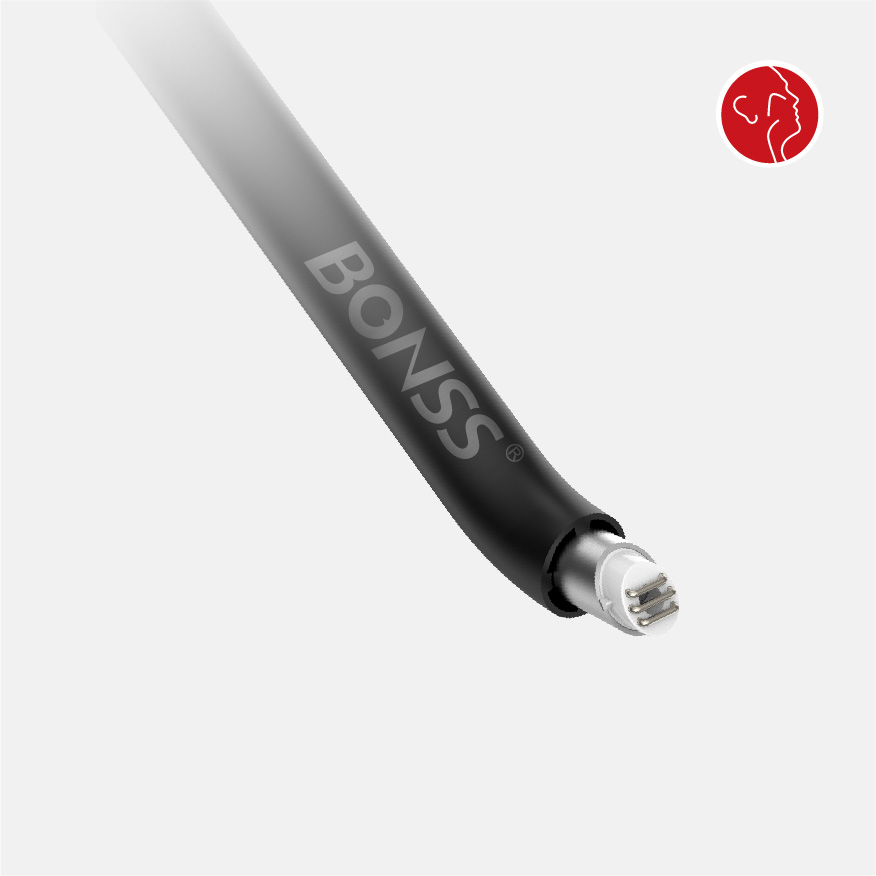
Now, endoscopic cannulas are thin, hollow tubes designed to be inserted through a working channel of an endoscope or accessory, used to deliver fluids, inject medications, suction excess fluid, or guide other tools. You might know them as spinal needles, injection cannulas, or sheath cannulas depending on their design, but at their core, they’re all about precision and control in tight, hard-to-see spaces. The question of how they fit into EUS makes sense because EUS procedures already use a bunch of tools—FNA needles, biopsy forceps, stents—and adding another might feel like it could complicate things. But in reality, cannulas fill gaps that other tools can’t, especially when you’re working with the limited space in an endoscope’s working channel (most are only 2.8mm to 3.7mm wide, so every millimeters counts).
Let’s break down the specific use cases where endoscopic cannulas are not just useful, but necessary for EUS. First, there’s the problem of tissue prepping and clear imaging. When you’re doing an EUS-FNA, the area around the target (say, a pancreatic mass) is often filled with gas, mucus, or small amounts of blood from prior tool use. Gas is a big enemy of ultrasound imaging—it creates bubbles that block sound waves, so your team can’t get a clear view of the target. That’s where a flushing cannula comes in. A lot of clinicians I work with use a 25G or 27G flushing cannula to deliver sterile saline through the working channel, precisely to the area around the probe. The saline displaces the gas and mucus without disturbing the tissue they’re trying to examine. I’ve heard stories of EUS teams spending 10 minutes fighting blurry images, only to switch to a flush cannula and get a clear view in 60 seconds. That’s not just a time saver—it means faster procedures, less sedation for patients, and fewer repeat scans.
Another big use is fluid access and drainage. Many EUS procedures are focused on collecting samples or draining cysts, pseudocysts, or bile ducts. For example, pancreatic pseudocysts are fluid-filled sacs that can cause pain or infection, and EUS-guided drainage is the standard treatment now. To do this, you need to puncture the cyst wall with an FNA needle, but once you’re in, you need a way to drain the fluid. This is where a transesophageal or transgastric cannula comes in—often a 19G or 21G cannula that fits through the working channel alongside the drainage stent or needle. The cannula acts as a secure, sealed path to prevent air from getting into the cyst (which would re-contaminate it) and lets you suction out the fluid slowly, so you don’t cause sudden pressure changes that could make the patient uncomfortable or lead to bleeding. I recently spoke to a nurse manager at a community hospital in Ohio who told me that since they started using our dedicated EUS drainage cannulas, their cyst drainage complication rate dropped by 12%—that’s a tangible difference for both patients and the clinic’s efficiency.
Then there’s injection use, which is where cannulas have really evolved for EUS over the last 5 years. Early EUS injection was mostly done with regular FNA needles, but those aren’t designed for long, precise injections into deep tissues. For example, when you’re injecting local anesthesia into the lining of the esophagus before a biopsy, or injecting a sclerosant into a gastric varice before banding, you need a cannula that has a sharp but atraumatic tip, a secure hub to attach a syringe, and a length that fits exactly through the EUS working channel. A lot of my clients tell me they switched from using general-purpose injection needles to EUS-specific cannulas because the cannula’s design prevents the needle from bending inside the working channel—something that’s a real risk with longer needles. A bent needle can damage the endoscope or the tissue, and that’s a nightmare for any procedure team.
Now, let’s address the elephant in the room: why isn’t this more widely known? For a long time, EUS tooling was siloed—companies made ultrasound probes, FNA needles, and cannulas, and clinicians didn’t always connect that cannulas could be adapted. A few years ago, most cannulas were made for colonoscopies or upper endoscopies, not the specific demands of EUS, which requires tools that can withstand the friction of being pushed through a 3-meter long working channel, and have markers that align with ultrasound depth scales. I remember when I first started supplying cannulas to EUS teams in 2015; a lot of clinicians would say, “We don’t use cannulas for EUS” because the cannulas they tried were the wrong size or tip design. But as EUS has become more common (the number of EUS procedures in the U.S. grew 40% between 2010 and 2020, according to the American College of Gastroenterology), manufacturers have started to develop EUS-specific cannulas, and teams have figured out the right use cases.
But it’s not just about using any cannula— it’s about choosing the right one for the procedure. For example, a 22G injection cannula is perfect for small, precise injections into lymph nodes, while a 19G flushing cannula is better for large-volume fluid drainage. And there’s a difference between disposable and reusable cannulas, too. For EUS, disposable cannulas are almost always preferred because reusable ones can develop small burrs on the tip after sterilization, which can scratch the endoscope’s working channel or cause tissue trauma. I always advise teams to match the cannula’s inner diameter to their endoscope’s working channel—too small, and it won’t deliver enough saline or suction; too big, and it won’t fit at all. It’s a balance that comes from working with EUS teams regularly, which is why I’ve built my supply business around being more than just a vendor—we work with clinics to help them choose the right tool for each specific EUS case.
Let me share a quick example to illustrate this. Last year, a team at a large academic medical center called me because they were struggling with EUS-guided FNA of a small pancreatic mass. Every time they tried to flush the area around the probe, the fluid would back up, and they couldn’t get a clear ultrasound image. The problem was that their flushing cannula had a too-large outer diameter, so it didn’t seal tightly in the working channel—air was leaking in, which created bubbles. We sent them a sample of our low-profile EUS flushing cannula, which has a 2.8mm outer diameter designed specifically to fit tight in standard EUS working channels. Within a week, they called back to say the flushing was seamless, their FNA success rate for that procedure went from 72% to 95%, and they cut the procedure time by 18 minutes on average. That’s the kind of impact the right cannula can have.
I’ll also be honest and say there are cases where cannulas aren’t the right fit. If you’re doing a simple upper endoscopy, a cannula might not be necessary, and a standard needle will work. But for complex EUS procedures, especially those involving deep tissue access, cyst drainage, or precise injections, cannulas are no longer an afterthought—they’re a core tool. The key is that they’re not just “small tubes”; they’re precision instruments designed to solve specific problems that EUS’s unique setup creates.
For anyone reading this who’s an endoscopy nurse, physician, or clinic manager, I know how overwhelming tool inventory can be. You have to balance cost, efficacy, and patient safety, and it’s easy to stick with the tools you’ve always used. But what I’ve learned over the last 8 years is that the right specialized tool—like an EUS-specific cannula—can make your job easier, improve patient outcomes, and reduce the stress of a high-stakes procedure. If you’ve been on the fence about adding cannulas to your EUS inventory, or if you’re having trouble with the ones you’re currently using, don’t hesitate to reach out. We work with teams of all sizes, from small private clinics to large academic centers, to find the right cannulas that fit their protocols, their endoscopes, and their patient needs.
Endoscopic Instruments At the end of the day, endoscopic procedures are all about precision—for the tools, for the image, and for the patient. A cannula that’s designed for EUS isn’t just an add-on; it’s a way to make every step of the procedure more controlled, more efficient, and safer. I’ve seen teams transform their EUS workflows by adding the right cannulas, and I’ve seen patients benefit from faster, less invasive procedures. If you’re ready to explore how endoscopic cannulas can improve your EUS processes, get in touch to discuss your specific needs. We’ll help you find the right tools, no matter how unique your practice is.
References
- American College of Gastroenterology. (2021). Clinical Guidelines for Endoscopic Ultrasound (EUS) Practice. ACG Press.
- Hawes, R. H., et al. (2020). Advances in EUS Accessories: Innovations in Cannulas and Needles for Gastrointestinal Procedures. Gastrointestinal Endoscopy Clinics of North America, 30(2), 215-232.
- Testoni, P. A., et al. (2019). Complication Rates Associated with EUS-Guided Cyst Drainage: Impact of Accessory Tool Selection. Endoscopy International Open, 7(5), E642-E647.
- Stone, C. A., et al. (2018). Optimization of Ultrasound Imaging in EUS: The Role of Intra-Procedure Flushing Cannulas. Journal of Clinical Gastroenterology, 52(9), 789-794.
Jiangsu Bonss Medical Technology Co., Ltd.
As one of the most professional endoscopic cannulas manufacturers and suppliers in China, we’re featured by quality products and good price. Please rest assured to buy bulk endoscopic cannulas for sale here from our factory. Customized orders are welcome.
Address: Building #7,No.898,China Medical City Avenue, Haling District, Taizhou City.Jiangsu P.R. China
E-mail: inquiry@plasma-surgical.com
WebSite: https://www.bonssmedical.com/
