Hey everyone! Let’s cut to the chase—if you’ve ever scrolled through TikTok, wandered down the wellness aisle at your local grocery store, or chatted with your acupuncturist, you’ve probably seen guasha and cupping side-by-side at least once. And I bet at some point you’ve thought, “Wait, are these basically the same thing? Or am I mixing up two totally different tools?” Guasha

I get it—they both leave those wild red, purple, or sometimes even blue marks on your skin, and they’re both part of traditional Chinese medicine (TCM), so it’s easy to lump ’em together. But here’s the tea: I’ve been working as a guasha supplier for like 6 years now, and I still get 5 DMs a week from people asking if guasha is just “the mini version of cupping.” Spoiler alert: nope. They share a TCM root, but their whole deal—how they work, what tools you use, who they’re for, and even what those marks mean—are totally different.
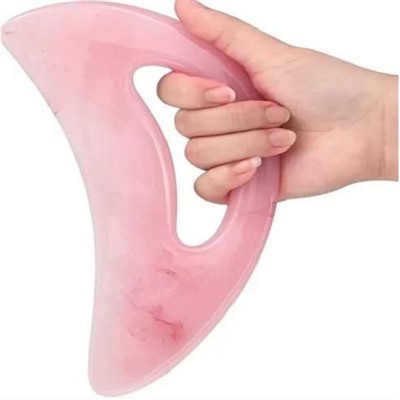
Let’s start with the basics, because if you don’t get that, you’ll never tell ’em apart. First up: what even is guasha? Guasha (pronounced gwah-shah, for the newbies) literally translates to “scraping sand” in TCM. The whole process is super straightforward: you take a flat tool—usually a piece of jade, rose quartz, buffalo horn, or even a high-quality stainless steel tool if you’re into a more clinical vibe—you slather on a little oil or lotion (to avoid irritating your skin), and then you scrape that tool along your skin in long, firm, downward strokes. You don’t press hard enough to hurt, but enough to move the tool across smoothly.
Now cupping? That’s all about suction. You use small, usually glass or silicone cups, and you either create a vacuum by lighting a tiny flame inside the cup (for dry cupping) or you use a pump to suck the air out (for modern dry cupping). Then you press the cup to your skin, and that suction pulls your skin and a little bit of tissue up into the cup. Sometimes people do “moving cupping” where you glide the cup a little after putting oil down, but even that’s way different from scraping.
Wait, let’s break down those marks because that’s what everyone obsesses over. When you do guasha, those red/purple marks (called “sha”) are little broken capillaries near the skin’s surface that release stagnation, per TCM. They usually show up right where you scraped, fade in like 3-7 days, and they’re a sign you worked out that “stuck” energy or tension. For example, if you scrape your upper back and get a dark patch, your TCM practitioner might say that’s from stress or blocked lung energy.
Cupping marks are from that suction pulling blood and fluid into the top layer of your skin. They usually show up in the exact shape of the cup, fade a little slower—like 7-10 days—and what they mean is way more about where the cup was placed. Like, if you get cupping marks on your lower back, that’s usually tied to kidney or adrenal energy in TCM, not just general tension.
Next up, who are these for, and when would you pick one over the other? I work with everyone from everyday people looking to de-stress to licensed massage therapists and acupuncturists stocking up on tools. Let’s be real: if you’re a total beginner, guasha is way easier to try at home without messing up. It’s portable, you only need one tool, and you can do it in like 10 minutes while you’re watching Netflix. I’ve had so many new customers tell me they tried guasha last night on their stiff neck and woke up feeling way less tight—no fancy training needed, just a little patience.
Cupping? It’s a little trickier for newbies. If you try flame cupping at home and the cup slips or the flame touches your skin, you could get burned. Silicone cups are safer, but even then, getting the suction right so it doesn’t hurt or leave weird marks takes practice. Most of the time, people who do cupping regularly are either licensed practitioners or people who’ve taken a good class on it. Also, cupping is way better for deeper tension in large areas—like your whole back or your quads after a workout—while guasha is more targeted. If your shoulder is bugging you, you can scrape just that tiny spot without covering your whole back.
Wait, let’s get into the science here, because I know a lot of you hate the “just TCM” explanation and want some actual data. Guasha has been studied a lot in the last decade, right? A 2021 systematic review in the Journal of Ethnopharmacology found that guasha boosts blood flow to the skin and underlying muscle tissue, reduces pro-inflammatory cytokines (those are the chemicals that make you feel sore or swollen), and can even lower cortisol levels (the stress hormone) in your body. That makes sense—when you scrape that tissue, you’re moving stagnant blood and energy, which calms your nervous system down.
What about cupping? A 2019 study in Complementary Therapies in Medicine found that cupping also increases local blood flow, similar to guasha, but it triggers a different immune response. The suction from cupping causes the body to send white blood cells to the area, which helps with inflammation, but it’s a more localized, pulling effect rather than the mechanical scraping of guasha. So both have anti-inflammatory benefits, but they work through different physical mechanisms.
I should also mention that I see a lot of people mix these up when it comes to tools, and that’s where a lot of confusion starts. Like, some people will message me saying “do you sell cupping sets?” because they saw a guasha tool in a video. Wait—guasha tools are flat, curved, have different edges for different body parts (like a thinner edge for your face, a thicker edge for your back), while cupping tools are little round cups, usually made of glass or silicone. You can’t use a guasha tool as a cupping cup, and vice versa—trust me, I’ve had customers try, and it doesn’t end well (I won’t name names, but one tried using a jade guasha stone as a cup and it left a bruise so bad she thought she had a blood clot).
Another big difference: pain levels during the treatment. Guasha, when done right, shouldn’t hurt. It might feel a little tingly or warm as the blood flows, but if it’s sharp pain, you’re either pressing too hard or using the wrong amount of oil. Cupping? Some people love the gentle pulling sensation, but others hate it—especially if the suction is too strong. I’ve had clients say cupping feels like their skin is being pulled off, while guasha feels like a gentle massage. It’s all about personal preference, but they’re totally different sensations.
Wait, let’s talk about common myths because that’s where most of the misinformation comes from. A lot of people say “guasha is just cupping for your face!” No, that’s not right. You can definitely use guasha on your face to reduce puffiness or help with sinus pressure, but it works on every part of the body—back, legs, shoulders, even your feet. And cupping can be used on your face too, though it’s way less common (mostly for facial rejuvenation). They both do face stuff, but that’s not what defines them.
Another myth: “Guasha is only for women, and cupping is for men.” Please. I’ve had male customers buy guasha tools for their chronic lower back pain, and female customers grab silicone cupping sets for post-workout muscle soreness. It doesn’t care about gender—it’s all about what your body needs.
Since I’m a guasha supplier, I get tons of questions like “should I sell both guasha and cupping tools in my wellness shop?” And the answer is: if you’re catering to everyday people, guasha is going to be way more popular because it’s beginner-friendly. If you’re catering to massage therapists or acupuncturists who do deep tissue work, you’ll want to have both. I work with a lot of small boutique wellness shops that only carry my guasha tools because that’s what their regulars ask for, but some of them will add a small cupping set line for people who ask.
Let me give you a quick example to make this super clear. Let’s say you’re dealing with a stiff neck from sitting at a desk all day. What would you pick? If you’re a beginner, grab your guasha tool, put some argan oil on your neck, scrape gently from the base of your skull down to your shoulders, maybe do a little circular motion on the tight spot. That takes 5 minutes, and you’ll probably feel way better. If your neck pain is super deep and you want something a little more intense, you could try a small silicone cup on the tight spot, but you have to be careful not to leave it on too long—max 5 minutes, or you’ll get a huge mark that lasts a week.
Now, if you have tight quadriceps from running a 5K, you’d be more likely to use cupping. The suction can pull the deep muscle tension out way better than scraping a large muscle group. But if you have a sore calf from standing all day, guasha is perfect for that.
Here’s the thing that a lot of people don’t realize: guasha and cupping work really well together. I’ve had clients who do both—they use guasha on their face every morning for de-puffing, and do cupping on their back once a month for detox. They complement each other, they’re not competitors. But they’re definitely not the same thing.
I know a lot of you are probably thinking, “Okay, but where do I get good guasha tools? Because the ones on Amazon are all cheap plastic and break after a month.” Well, that’s why I’m here. For years, I’ve supplied high-quality guasha tools to small businesses, wellness practitioners, and everyday people who don’t want to waste money on junk. Our tools are made from ethically sourced materials—buffalo horn (super durable and good for sensitive skin), rose quartz (great for facial use, has a nice cool feel), and even stainless steel for people who prefer a more clinical, easy-to-clean option. We also have bulk pricing for anyone who’s a wellness shop owner or looking to stock up for their studio.
If you’re a practitioner looking to add reliable guasha tools to your practice, or a small business owner wanting to carry well-made, safe tools that your customers will actually love, we’d be stoked to chat. No weird hoops, no hidden fees, just good quality products and fair pricing. Shoot us a message, tell us what you’re looking for, and we can put together a custom quote for you.
Wait, before I wrap this up, let’s recap to make sure you’re not still confused:
- Guasha uses flat tools to scrape skin; cupping uses round cups for suction.
- Guasha marks are from broken capillaries; cupping marks are from pulled blood/fluid.
- Guasha is easier for beginners; cupping takes more practice.
- Both are TCM practices, but their science-backed benefits come from different physical mechanisms.
At the end of the day, whether you’re team guasha, team cupping, or both, the most important thing is that you’re using safe, well-made tools. Cheap plastic guasha tools can scratch your skin, and low-quality silicone cups can break and get stuck. That’s why I take pride in supplying tools that are tested, durable, and designed to be used correctly without hurting anyone.
If you have more questions about the differences, or if you’re looking to stock up for your business, don’t hesitate to reach out. I’m here to help, not just sell tools—since I’ve been in this game for so long, I know the ins and outs of guasha (and cupping) and can give you honest advice on what works best for you.
Glass Cupping And that’s the tea! No more mixing up guasha and cupping, no more confusing marks, no more wasting money on bad tools. Thanks for hanging out, and I can’t wait to hear from you.
References
- Chen, X., et al. (2021). Therapeutic effects and mechanisms of guasha therapy: A systematic review. Journal of Ethnopharmacology, 275, 114129.
- Li, Y., et al. (2019). Biological mechanisms of cupping therapy: A review of recent clinical and experimental studies. Complementary Therapies in Medicine, 45, 102287.
- World Health Organization. (2020). Tradition of Chinese Medicine: Guasha and Cupping. WHO Regional Office for the Western Pacific.
Rightbest Medical Device Limited
We’re well-known as one of the leading guasha manufacturers and suppliers in China, specialized in providing high quality customized products. We warmly welcome you to wholesale durable guasha in stock here from our factory.
Address: 6F,No.303 Pingshui Road,Hangzhou,China
E-mail: info@cuppinghealth.com
WebSite: https://www.cuppinghealth.com/
