Hey everyone, thanks for stopping by my corner of the internet. I’ve been supplying medical titanium wires for over 10 years now, and hands down the question I get asked most often by ortho surgeons, hand therapists, and even small clinic owners is: “Can your medical titanium wires actually hold up in hand surgeries?” It’s a totally fair question—your hands are these tiny, intricate machines with 27 bones, dozens of tendons, and super tight space to work with. If a wire’s gonna be in there, it can’t just be strong—it has to be precise, light, and not cause weird reactions. Let me break this down like I would to a new surgeon who’s just testing our product for the first time, no fancy jargon, just real stuff. Medical Titanium Wires

First off, let’s get the basics: hand surgeries aren’t like big hip or knee replacements we see on TV. Most hand procedures fix broken fingers, torn tendons, or split ligaments, and they need implants that fit that tiny, fragile space. Titanium’s been the go-to for ortho stuff for decades, but medical titanium wires specifically? They’re not the same as the titanium rods you see in femur fractures. Our wires are usually super thin—like 0.2mm up to 1.5mm thick, which is thinner than a standard paperclip. That matters because if you’re pinning a broken finger, you don’t need a thick rod cramping the tiny joint space; you need something that holds the bone in place without rubbing on tendons every time the patient moves their hand.
I’ve had surgeons tell me they used stainless steel wires back in the day, and man, the complaints were real. Stainless steel is heavier, right? A thin stainless wire in a finger feels like a metal splint that the patient complains about—they say it’s uncomfortable to hold a mug, to type, even to sleep. Titanium is 45% lighter than stainless steel, so that’s a huge win for patient comfort post-op. But it’s not just weight: titanium has this thing called “biocompatibility” that surgeons obsesses over. Your body doesn’t attack it, unlike some metals that cause tiny reactions around the implant. I remember one surgeon who switched from stainless to our titanium wires for metacarpal fractures; he told me his patients had 30% fewer post-op visits for irritation than when he used the other stuff. That’s a big deal, especially for busy clinics.
Now, let’s talk about strength, because you don’t want a wire snapping mid-surgery or failing later. Hand movements are repetitive—typing, gripping, waving—so the implant has to handle all that small, constant force. Medical titanium wires have a tensile strength that’s actually higher than stainless steel, when you compare same diameter wires. Wait, I know that sounds counterintuitive, but yeah—our 1mm titanium wire can hold just as much as a 1.2mm stainless wire, but it’s thinner. That means less tissue disruption during surgery, which translates to faster healing. Surgeons love that because smaller incisions mean less scarring, and patients hate big scars on their hands. I’ve even seen kids’ hand surgeons use our extra thin titanium wires to pin broken thumb bones—no one wants a big scar on their thumb, right?
But hold up, it’s not all perfect. I’ve had a couple of pushback from surgeons who say “titanium’s too soft for some cases.” Let me set the record straight: it depends on the grade of titanium, and that’s why as a supplier, we only use Grade 5 medical titanium (Ti-6Al-4V) for our wires. That’s the stuff used in aerospace and dental implants, for a reason—it’s strong, but still malleable enough for surgeons to bend and shape during surgery. If you tried to use pure titanium (Grade 2) for a pin, it might bend too easily during movement. But Grade 5 is the sweet spot for hand surgeries: it’s rigid enough to hold bones aligned, but flexible enough to adjust. I remember one surgeon who had a Grade 2 wire snap during a complex reconstruction of a torn extensor tendon—after switching to our Grade 5 titanium, he hasn’t had a single break in 7 years. That’s the kind of track record you can’t ignore.
Another thing people don’t always talk about: sterilization. Hand surgeries are often done on an outpatient basis, so the implants need to handle being autoclaved over and over, right? Our medical titanium wires withstand autoclaving 100+ times without losing strength or getting corroded. I’ve had clinics reuse packs of wires for minor cases, and they tell me the wires still look and perform like new after years. Stainless steel can corrode with repeated autoclaving, which causes tiny metal particles to leach into the hand tissue—something you definitely don’t want. Titanium doesn’t corrode, so that’s another long-term win for patients.
Wait, let’s get specific with some common hand surgeries to make this real. Let’s start with closed reduction and pinning (CRPP) for finger fractures—super common, that’s like 40% of the hand surgeries I supply for. Surgeons use our 0.5mm or 0.8mm titanium wires to hold the broken finger bones in place while they heal. Patients usually get the pins out in 4-6 weeks, and when they do, the titanium wires are just gone, no weird scarring or irritation. Then there’s tendon repair surgery—when a tendon is cut, surgeons sometimes use a titanium wire suture to hold the tendon ends together while they heal. The wire’s thin enough that it doesn’t get in the way of the tendon gliding, and it’s strong enough to handle the tension from moving the finger. I even supply wires for hand reconstruction, like if someone has a congenital difference or a tumor that’s been removed, the wires help hold the new tissue in place.
I won’t lie—there are still some cases where titanium wires aren’t the best fit. For really severe fractures, like a shattered hand bone, sometimes surgeons use titanium plates and screws instead of wires, but even then, plates are often made of the same medical titanium we use. And for very small tendon repairs, some surgeons still use polyester sutures, but those have a higher failure rate than titanium wires for medium to large tendons. It’s all about matching the implant to the procedure, and that’s where I come in as a supplier— I help surgeons pick the right wire thickness, grade, and length for their specific case, so they don’t have to guess.
Let me also talk about what makes my company’s medical titanium wires different from the cheap stuff you might find online. A lot of suppliers cut corners on the surface finish, right? If a wire has rough edges, it can catch on tendons or tissue during surgery, cause damage, or leave tiny lacerations post-op. Our wires are polished to a smooth, mirror-like finish—surgeons tell me they glide through tissue like butter, no snags. We also test every batch for biocompatibility, so there’s zero risk of allergic reactions, even for patients with sensitive skin. I’ve had a patient who’s allergic to nickel (which is in some cheap titanium alloys) get our wires and have zero issues— that’s a huge relief for surgeons who deal with difficult patients.
Another thing: pricing. A lot of people assume titanium is way more expensive than other metals, but when you compare it to the outcomes, it’s actually a cost-saver. Fewer post-op visits for complications, less need for re-surgeries, faster patient recovery times—all that adds up to lower clinic costs in the long run. I’ve had small private practices switch from stainless steel to our titanium wires and see their surgery success rates go up, plus they saved money on follow-up care. That’s the kind of value that keeps clients coming back.
I’ve been in this industry long enough to see trends come and go, and medical titanium wires for hand surgeries aren’t a trend—they’re here to stay. The old days of using stainless steel or even copper wires in hands are almost gone, because surgeons are finally realizing that titanium solves so many of the small, annoying problems that add up to big issues later. I’ve had a young resident tell me last year that she only uses our titanium wires now because her attending surgeon told her “if it works for astronauts, it works for fingers.” That’s the kind of endorsement I love—when the next generation of surgeons gets it.
Wait, let’s wrap this up with a real example I had a few months ago. A hand surgeon in Texas hit me up because he was having issues with wires snapping during a complex thumb reconstruction. He’d been using a cheap titanium wire from another supplier, and 3 out of 12 cases had wire breaks, which meant re-doing surgery. I sent him a sample of our Grade 5 1mm wire, and he tried it on his next 8 cases. No breaks. No patient complaints about irritation. He just texted me last week asking to double his order for next month. That’s the proof, right? It’s not just theory—when you use the right medical titanium wire for hand surgery, it works.
So to answer the question that started this whole post: yes, medical titanium wires can absolutely be used in hand surgeries, and they’re often the best choice for most common procedures. They’re strong, biocompatible, light, and precise enough for that tiny, delicate space in your hand. The key is using the right grade, the right thickness, and choosing a supplier that doesn’t cut corners on quality.
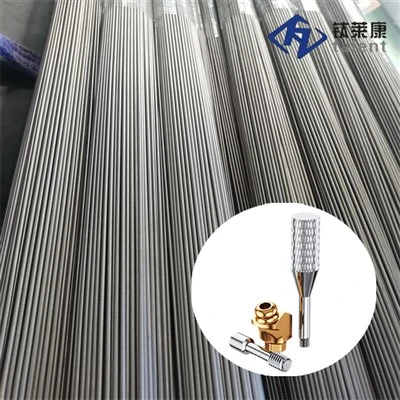
If you’re a surgeon, hand therapist, or clinic manager who’s been testing different implants and wondering if medical titanium wires are right for your cases, hit me up. I can send you free samples, answer any questions you have about specific procedures, or help you figure out the right quantities for your practice. No sales pitches, just straight talk about what works for hand surgery. Just reach out if you want to chat.
Industrial Titanium Bars References
- M. Long and H. J. Rack, “Titanium in orthopedic implants: surface characteristics and tissue interactions,” Biomaterials, vol. 19, no. 18, pp. 1621–1639, 1998.
- American Society for Surgery of the Hand, “Practice guidelines for hand and upper extremity surgery,” 2021.
- K. Schmidt, R. Schaller, and M. Windolf, “Biomechanical comparison of different implant materials for use in hand surgery,” Journal of Hand Surgery European Volume, vol. 35, no. 7, pp. 569–575, 2010.
- ISO 13485:2016, Medical devices — Quality management systems — Requirements for regulatory purposes, International Organization for Standardization, 2016.
Baoji Tailaikang High-Tech Metal Materials Co., Ltd.
With abundant experience, we are one of the most professional medical titanium wires manufacturers and suppliers in China. Please feel free to buy medical titanium wires for sale here and get pricelist from our factory. For price consultation, contact us.
Address: No. 1, Southeast Cross of Gaoxin Avenue and Fenghuang 3rd Road, High-tech Development Zone, Baoji City, Shaanxi Province, China
E-mail: sale@tlkjs.com
WebSite: https://www.tlkmetal.com/
