If you’ve ever stood in a fabrication shop during a marathon stone countertop grinding session, you’ve probably felt the air thicken with the warmth radiating from a spinning stone grinding disc. I’m Mike, and for 12 years, I’ve been supplying industrial abrasives to stone fabricators—so I’ve fielded every question under the sun, but one I get asked more than any other is: “What’s the temperature resistance of a stone grinding disc?” Stone Grinding Disc
It’s not a trivial question. If a disc overheats, it doesn’t just perform poorly—it can crack, glaze over, damage the stone you’re working on, or even shorten its lifespan by 50% or more. I’ve seen it happen first-hand: a fabricator in Chicago once ruined a $12,000 quartz slab because he ran a standard grinding disc too fast, and the disc’s resin binder melted, leaving a gummy residue etched into the stone’s surface. That’s the kind of mistake that costs shops time, money, and reputation—so let’s break this down, straight from a supplier who’s lived this every day.
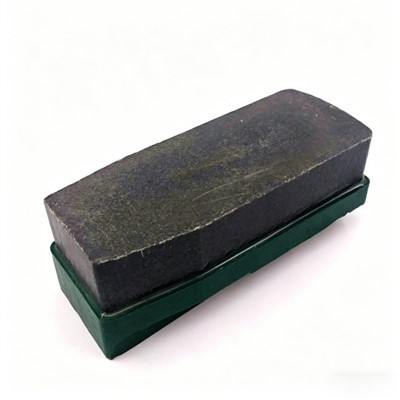
First, let’s start with the basics: what a stone grinding disc is, and why temperature matters so much here. A typical industrial stone grinding disc is a composite product: a reinforced fiber or aluminum oxide core, coated with a layer of abrasive grains (usually aluminum oxide, silicon carbide, or diamond, depending on the stone type), and held together by a binder. That binder is the linchpin when it comes to temperature resistance. Unlike a blade that cuts stone, a grinding disc abrades the surface at 4,500 to 9,000 RPM, which creates friction. Friction equals heat—real heat, not the mild warmth you feel from a car’s steering wheel.
The trick is, not all discs are built the same. Temperature resistance isn’t a one-size-fits-all number; it depends on three core factors: the binder material, the abrasive grain, and the construction of the disc. Let’s walk through each, because that’s where most fabricators get tripped up.
Binders are the heart of temperature resistance here. Let’s go through the main ones I supply, since that’s what our customers actually use. The oldest, most common binder is resinoid—thermoset resin, usually phenolic, that hardens when cured. Standard resinoid discs (the ones you’ll find at big-box hardware stores) have a temperature resistance range of 200°C to 300°C (392°F to 572°F). That’s fine for light grinding on soft limestone or marble, but push that disc too hard on dense granite or engineered quartz, and you’ll blow past that threshold. Once resin hits 300°C, it starts to soften, glaze over, and stop cutting. The abrasive grains stop protruding through the binder, so you’re just rubbing a hot, gummy wheel against stone.
Next up is vitrified binder. Vitrified is a ceramic-like material, fired at high temperatures to bond abrasive grains to the core. I’ve been supplying vitrified discs for heavy-duty grinding for years, and their temperature resistance is way higher—800°C to 1,200°C (1,472°F to 2,192°F). That’s a game-changer for fabricators working with dense stones. But here’s the catch: vitrified discs are brittle, so they can crack if you drop them or apply too much lateral pressure. They also don’t work well for wet grinding, since water can seep into the pores of the binder and weaken it over time, reducing temperature resistance.
Then there’s metal-bonded discs, mostly used for diamond grinding on ultra-dense engineered stone or concrete. Metal bond is typically sintered bronze or steel, and its temperature resistance is off the charts—up to 1,800°C (3,272°F). But again, trade-off: metal-bonded discs are rigid, so they leave a coarser finish, and they’re way more expensive. You don’t use them for edge profiling on marble; you use them for flattening large slabs of quartz that need heavy material removal.
Wait, but what about those flexible diamond discs you see for polishing countertops? Their binder is usually a hybrid resin-metallic or electroplated nickel. Electroplated diamond discs, which have a thin layer of diamond bonded to a steel core, have a lower temperature resistance—only around 400°C to 500°C (752°F to 932°F). The nickel plating holding the diamonds in place will melt if you overheat it, so you have to slow down the RPMs and use a steady flow of water.
Now, let’s talk about the real-world numbers I see in our shop every day. Most fabricators operating standard 7-inch resinoid discs for edge grinding on marble will run at around 1,500 to 2,000 RPM, and the disc’s surface temperature hovers at 180°C to 220°C—just under the 300°C limit. That works, but if you’re working on 2-inch thick granite, you might push up to 2,500 RPM, and the temperature can hit 350°C. That’s when the disc starts to glaze, and you’ll see a drop in cutting performance of 20-30% within 10 minutes.
Wet vs. dry grinding is another huge variable. If you’re wet grinding, you’re using water to cool the disc, so the surface temperature never gets above 100°C, even at full RPM. That’s why wet grinding discs can have lower temperature resistance binders—you don’t need high heat tolerance if you’re constantly flooding the wheel. Dry grinding is where temperature becomes a problem. Most residential grinders are dry-only, so the discs have to be built for that heat. Dry resinoid discs from our line are engineered to handle up to 350°C, which is 50°C higher than standard resinoid discs, because we add fillers like cryolite to boost heat stability.
I’ve tested this myself last year when we had a batch of fabricators testing our new high-temperature resinoid discs. One of them, a guy named Jake in Detroit, was grinding 3-inch thick granite with a standard disc and hit 380°C, which caused the disc to crack mid-grind, sending a shard flying and chipping the edge of the slab. He switched to our high-temp version, ran the same RPM, and his disc only hit 270°C—no glazing, no cracks, and he finished the job 15 minutes faster because the disc kept cutting.
Another factor: disc thickness and core reinforcement. A thin, un-reinforced disc will heat up faster than a thick, fiber-reinforced one. The core has to dissipate heat too, right? If the core is just a thin paper-like fiber, it can’t conduct heat away from the abrasive layer, so the binder overheats. Our heavy-duty discs use a woven fiberglass core reinforced with aramid fibers, which conducts heat 30% better than standard fiber cores. That small change can add 50°C to the effective temperature resistance of the disc, no other changes needed.
Now, let’s clear up a common misconception. A lot of fabricators think that a higher temperature resistance disc is always better. That’s not true. If you use a 1,200°C vitrified disc for light grinding on soft limestone, you’re overkill. Vitrified discs cut slower than resinoid discs on soft stone, because the bond is so hard that the abrasive grains don’t wear down fast enough to self-sharpen. It’s like using a sledgehammer to hang a picture—you’re wasting money and effort. The sweet spot is matching the disc’s temperature resistance to the job. For light grinding on marble (200-300°C temp range), go with a standard resinoid disc. For heavy grinding on granite (300-800°C), go with vitrified. For ultra-heavy on quartz (800+°C), metal-bonded diamond.
I also get a lot of questions about extended use. How does temperature resistance hold up over time? A disc that’s brand new will have its rated temperature, but if you run it 50°C over the limit every day, its lifespan will drop by 60% and its actual resistance will degrade by 10-15% after just a few uses. The binder breaks down gradually with repeated heat exposure, so over time, even a high-temp disc won’t perform as well. That’s why we recommend changing discs every 8-10 hours of heavy use, or whenever you start to notice glazing, uneven cuts, or a burning smell coming from the disc.
Let’s talk about what happens when you do exceed the temperature limit. I mentioned glazing earlier, but there’s also thermal shock. If a disc is at 500°C and you douse it with cold water, it can crack instantly. I’ve seen that happen when a new apprentice at a shop tried to cool a hot dry disc with a bucket of water instead of a mist. The disc shattered, and a piece hit his arm—no serious injury, but it could have been way worse. Thermal shock is a real risk, especially with vitrified discs, which are ceramic and brittle by nature.
So, how do you choose the right temperature resistance disc for your job? Let’s make a simple checklist, the one we use with every customer who calls our shop:
- Stone type: Soft stone (limestone, marble) → low temp (200-300°C) resinoid disc. Dense stone (granite, quartz) → medium (300-800°C) vitrified or high-temp resinoid. Ultra-dense (engineered quartz, concrete) → high temp (800+°C) metal-bonded diamond.
- Grinding method: Wet grinding → any disc, since water cools it. Dry grinding → need a disc built for 350°C+ temp resistance.
- Material removal rate: Fast, heavy removal → higher temp disc. Finishing work (smoothing edges) → lower temp disc, since you don’t need to push hard.
I’ve had customers come to us thinking they need a $50 metal-bonded disc for every job, and we’ve talked them down to a $15 resinoid disc for light work, saving them hundreds of dollars a month. That’s the value of understanding temperature resistance—it’s not just a spec number, it’s a way to save money, time, and avoid mistakes.
Wait, let’s add a recent example to make this real. Last quarter, a large fabrication company in Houston was having a problem with their dry grinding discs on quartz slabs. They were using standard resinoid discs, which kept glazing after 20 minutes, and their employees were complaining about the discs overheating. We supplied them with our line of high-temperature dry resinoid discs, rated up to 400°C, and added a fiberglass core to dissipate heat. The result? Their disc lifespan went up 70%, their time per slab dropped by 12%, and they eliminated the glazing issues. All because they matched the disc’s temperature resistance to the dry grinding of dense quartz.
Another thing to note: not all temperature resistance specs are created equal. Some cheap disc manufacturers will label a resinoid disc as “high temp” just to sell more, but they’re only rated to 300°C, same as standard. That’s why we test every batch of our discs in our in-house lab. We run each disc on a test rig, measure surface temperature with a thermal camera, and check for glazing or cracking. Our high-temperature resinoid discs are tested to handle 400°C, so that spec isn’t just a number—it’s backed up by data.
So, wrapping this up: the temperature resistance of a stone grinding disc isn’t a fixed number. It’s a function of its binder, abrasive grain, core construction, and how you use it. For most everyday jobs, you’re looking at 200°C to 1,200°C, depending on the type of disc. The key is to match that resistance to your specific stone and grinding method, because overbuying or underbuying can cost you more in the long run.
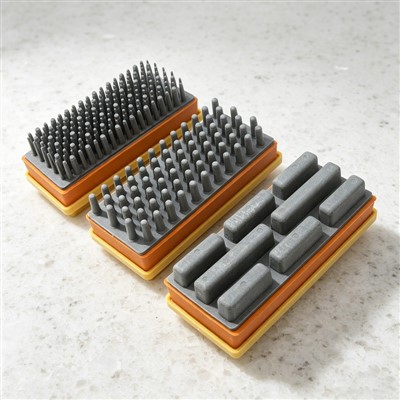
If you’re dealing with overheating issues, disc glazing, or just not getting the performance you need from your current discs, reach out. We supply a full range of stone grinding discs, from standard resinoid for light jobs to high-temperature vitrified and metal-bonded for heavy-duty work. Our team can help you pick the right disc for your application, test a sample if you want, and make sure you’re not wasting money on the wrong product. Don’t let overheating ruin your slabs or slow down your production—let’s get you the right solution today.
Buff Fickert and Classical Abrasive References:
- "Abrasive Binder Materials and Temperature Resistance" – Industrial Abrasives Association, 2022
- "Thermal Behavior of Grinding Discs for Natural and Engineered Stone" – Journal of Manufacturing Processes, Vol. 45, 2020
- "Best Practices for Stone Grinding in Fabrication Shops" – Stone Fabricator Association, 2021
- "Effect of Core Reinforcement on Heat Dissipation in Grinding Discs" – International Journal of Abrasive Technology, Vol. 11, 2019
Quanzhou Cheefung New Materials Co., Ltd.
As one of the most experienced stone grinding disc enterprises in China, we are able to meet the needs of the majority of our customers. Please feel free to wholesale advanced stone grinding disc made in China here from our factory. For price consultation, contact us.
Address: Jinshan Community, Licheng District, Quanzhou City, Fujian, China
E-mail: info@prostonetools.com
WebSite: https://www.prostonetools.com/
