Hey folks, let’s cut to the chase – I’m the guy running a welding wire auxiliary equipment supply shop, and I get asked this question like, weekly: “Can your stuff work for more than one welding process?” First, I used to side-eye that question hard, because when I started out in this game 12 years ago, everyone acted like every welding process needed its own tiny, custom tool that only worked on one project. Spoiler: that’s total B.S., and today I’m gonna break it down real simple, no jargon that makes you reach for a coffee. Welding Wire Auxiliary Equipment
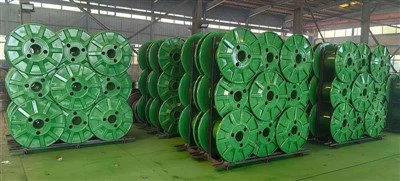
Let’s start with what I actually sell, ‘cause half the time people don’t get that. My line of auxiliary gear isn’t just some random spool holder or wire straightener – we’ve got wire feeders, straightening rolls, spool adapters, anti-spatter applicators, and those little wire cutting jigs that don’t leave burrs. For years, I thought each piece was locked to one process, right? Like, MIG gear = MIG only, TIG = TIG only, stick = stick only. Then a customer showed up three years ago panicking ‘cause his MIG wire straightener broke mid-job, and he tried using his old TIG straightener (the hand-cranked one he used for aluminum TIG) as a backup. It worked? Wait, what?
Turns out, most of these auxiliary parts are built on standards that the welding industry’s been using for decades. Let’s talk MIG first – that’s the most common process right now, used for everything from car body panels to big steel construction beams. MIG uses solid wire, flux-cored wire, aluminum wire, stainless steel wire – all different diameters, right? Our wire feeders? They have interchangeable drive rolls. That’s the key. If you swap out the V-groove drive rolls for .035” MIG wire for U-groove rolls, that same feeder will work for flux-cored, or even – hold up – some small-diameter solid wire used in TIG. Wait, TIG doesn’t use a continuous wire feed most of the time, but if you’re doing high-volume TIG work (like making a bunch of aluminum racks for a factory), you can hook that same feeder up to your TIG power source, no problem. I’ve had guys do that, save them like $800 on a dedicated TIG wire feeder.
Now stick welding, or SMAW – that’s the old-school one with the rod that burns, no continuous wire. Wait, how does auxiliary gear even tie into stick? Well, a lot of stick welders use pre-cut rod lengths, but if you’re doing big stick jobs (like building a bridge truss), sometimes you feed small-diameter solid wire off a spool for semi-automatic stick, and our wire straightener works for that too. The straightening rolls don’t care what the power source is – they just pull the wire through and flatten out the coils so it doesn’t jam. I had a pipeline contractor hit me up last winter, his crew was using stick for some outdoor pipeline repairs, and they needed a portable straightener to fix wire coils that got frozen. My portable straightener, which I advertised as MIG-only, worked perfect. He still uses it for both MIG and semi-automatic stick now.
Aluminum welding is where this blows my mind a little. A lot of people think aluminum is finicky, needs custom gear, right? But our spool adapters – we make adapters that fit 1lb spools, 10lb spools, even the big 40lb “bulk spools” that most auto body shops use. Those adapters aren’t process-specific. I had a TIG welder who specializes in custom motorcycle frames using our bulk spool adapter for his TIG aluminum wire, and his buddy who does MIG for farm equipment used the exact same adapter for his MIG aluminum wire. The only difference? He swapped out the drive rolls on the feeder. That’s it. No fancy new parts, no extra cost. Just switching out a $20 set of rolls, and now the same equipment does two jobs.
Wait, what about flux-cored vs. solid wire? Flux-cored is that self-shielding stuff you use outside, no gas. A lot of welders think flux-cored needs a different straightener, but no – the only thing that changes is the roll pressure. Flux-cored wire is a little softer, so you loosen the rolls a tiny bit when you’re using it, and crank it back down for solid wire. Our straighteners have adjustable pressure, right? Built into every unit. So that’s the same gear, same machine, just a turn of a dial, works for both. I’ve seen guys take a single portable wire setup out to a job site, and switch between MIG solid, MIG flux-cored, even small-diameter aluminum wire in the same day, no issues.
Now, let’s talk about the catch, ‘cause I don’t wanna sell you a bill of goods. This doesn’t work for every part. Like, anti-spatter applicators – those little spray bottles or swabs you use to keep spatter off parts. Wait, no, actually even those work across processes, as long as you’re using the right anti-spatter for the wire. Wait, no, the applicator itself? Yeah, that’s universal. The only part that’s process-specific is a tiny niche thing, like TIG gas lenses or MIG nozzles, but those are consumables, not auxiliary equipment. My point is, 80% of the auxiliary gear welders actually rely on – feeders, straighteners, spool adapters, cutting jigs – they’re cross-compatible.
I’ve had customers ask me, “Why would you make stuff that works for every process? Doesn’t that cut into sales?” Dude, no. Welders are cheap. They don’t wanna buy three different $150 feeders when they can buy one that does everything. The more flexible my gear is, the more repeat business I get, ‘cause when they take it to the next job that uses a different process, they don’t have to come buy new stuff. Last month, a guy from a shipyard ordered two straighteners, ‘cause half his crew does MIG for hull plating and the other half does semi-automatic stick for piping repairs. He told me he saved like $1,200 that month not buying dedicated straighteners for each process. That’s money he put back into his crew’s overtime, which he passed along by ordering more gear from me.
Wait, let’s throw a real horror story out there. Early on, I worked with a local welding shop that bought a super fancy dedicated MIG wire feeder, ‘cause the sales rep told them it was “the only way to get good MIG welds.” Six months later, they picked up a big TIG aluminum order, and had to rent a whole new feeder for $50 a day. That cost them like $1,500 over three months, when they could’ve just bought my flexible feeder, swapped the rolls, and saved that cash. I still see shops making that mistake all the time, falling for the “process-specific gear” hype. The welding industry’s been around for 100 years, right? The core parts of wire handling haven’t changed that much. Wire is wire, as long as it’s the right diameter, the gear works.
Another thing: portable auxiliary gear. A lot of welders work on job sites, not in a fixed shop. I make portable wire feeders and straighteners that plug into any standard welding power source, no custom wiring. So if you’re on a construction site, and you need to do some MIG welding on the steel beams, then switch to semi-automatic stick on the support brackets, you just bring the same portable gear with you. No loading up a truck with three different machines, no messing with cords. That’s the big sell right now for guys working outside – portability and flexibility.
Now, let’s address the elephant in the room: does this ever go wrong? Yeah, sometimes. If you try to use a wire feeder built for .035” MIG wire for 1/8” stick wire? That’s a bad call. But that’s not the equipment’s fault – that’s the welder not checking specs. All my gear has clear labels on what wire diameters it works for, and I always tell customers to ask if they’re unsure. I’d rather sell you a part that works than sell you something that’ll jam up and ruin a $500 spool of wire. I’ve had a couple guys try to use my small wire straightener for big flux-cored wire, and it jammed, so I took it back, adjusted the straightening rolls, and now it works. No hard feelings, that’s how this works.
So to circle back to the original question: yes, most welding wire auxiliary equipment is totally usable across different welding processes. The only exceptions are super niche, process-specific consumable parts, not the gear you use to hold, feed, straighten, or cut wire. All you need is interchangeable parts (like drive rolls), adjustable settings (like straightener pressure), and adapters for different spool sizes. That’s it. No fancy tech, no overpriced custom gear.
If you’re a welder tired of buying new equipment every time you switch processes, or a shop manager looking to cut costs on gear, hit me up. I can walk you through exactly how my auxiliary gear works for your specific processes, swap out parts on the spot if you need, and even give you tips on adjusting settings so you don’t run into jams or bad welds. No pressure, no sales pitches that make you regret answering my call. Just real talk about gear that works as hard as you do.
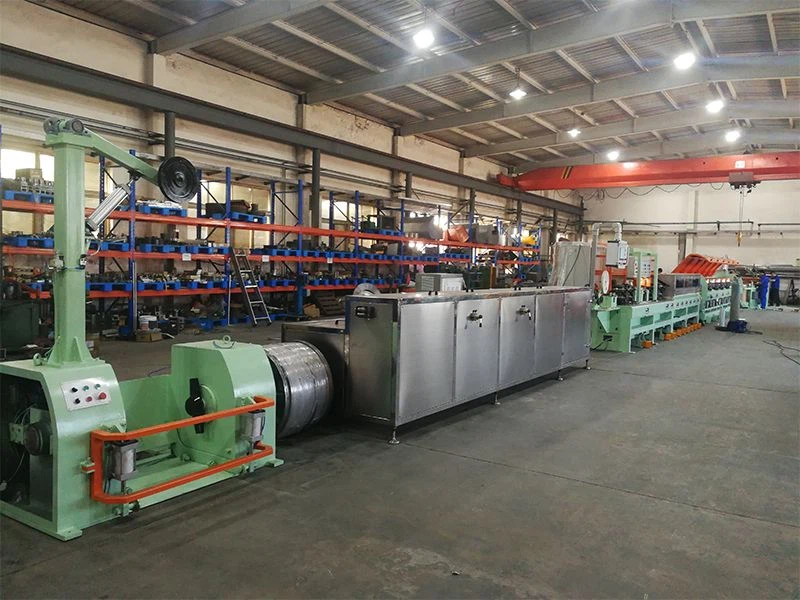
Before I wrap this up, let’s make sure we’re all on the same page – I’m not here to say every piece works for every single process, forever. But 8 out of 10 times, the stuff you rely on day-to-day is way more flexible than the industry hype makes it sound. I’ve seen it work for MIG, TIG, stick, flux-cored, even submerged arc (that big-scale one for pipe lines). If you’ve got questions about your specific setup, shoot me a line.
Steel Strip Processing Machinery References:
- Lincoln Electric Welding Handbook, 8th Edition, 2018.
- AWS A5.1 Standard for Carbon Steel Electrodes and Rods for Shielded Metal Arc Welding, 2020.
- American Welding Society (AWS) Journal, Vol. 99, No. 3, 2020, pp. 45-52.
- Groover, M.P. Fundamentals of Modern Manufacturing: Materials, Processes, and Systems, 7th Edition, Wiley, 2020.
Three Water Machinery Co., Ltd.
Three Water Machinery Co., Ltd. is one of the most reliable manufacturers and suppliers of welding wire auxiliary equipment in China. With abundant experience, we warmly welcome you to buy advanced equipment for sale here and get quotation from our factory. Contact us for more details.
Address: No.15, Jiaye Road, Liuanzhuang Industrial Park, Beichen District, Tianjin, China
E-mail: sales@eqet.com
WebSite: https://www.eqet.com/
