If you’re a furniture hardware manufacturer looking to scale production, or a buyer who’s ever waited weeks for a replacement hinge, drawer slide, or shelf bracket die casting mold, you know that cycle time isn’t just a number—it’s the backbone of your lead times, production costs, and even your ability to meet customer demands. As a supplier specializing exclusively in furniture hardware die casting molds for over 12 years, I’ve fielded this question thousands of times: “What’s the typical cycle time for a mold that will make my drawer pulls, bed rail fasteners, or cabinet latches?” The short answer isn’t one-size-fits-all, though—so let’s break down the factors that shape every mold’s timeline, how we build our process to stay transparent, and what that means for your bottom line. Furniture Hardware Die Casting Mold
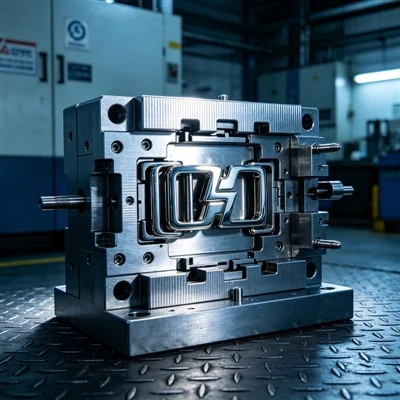
First, let’s start with the basics: A furniture hardware die casting mold is a custom tool made to shape molten zinc, aluminum, or zamak (the go-to alloys for furniture hardware, thanks to their durability and low cost) into precise parts. Unlike off-the-shelf molds for generic items, every furniture hardware mold is tailored to a specific part—so its cycle time depends on four core variables: part complexity, alloy choice, mold size, and post-machining requirements. Let’s walk through each one, using examples from projects we’ve done for brands ranging from small cabinet makers to national furniture chains.
Part complexity is the single biggest driver of cycle time, and it’s not just about how many holes a part has. Take a standard 4-inch drawer pull: it’s a simple, solid piece with a small mounting hole and a decorative curved face. That part’s mold has two primary halves, a few inserts for the holes, and minimal undercuts. For a simple part like that, we can design, machine, and test a fully functional mold in 18 to 22 days. Now compare that to a modern soft-close drawer slide: it’s not just a long, thin metal bar—it has internal glide tracks, a locking mechanism, and precision alignment grooves that need to line up within 0.02 mm (about the thickness of a human hair). The mold for that part has 8 to 12 separate components, including removable inserts for the tracks, cooling lines that run parallel to the internal surfaces to prevent warping, and venting channels to release trapped air during casting. That complexity adds 12 to 15 days alone, pushing the cycle time to 30 to 35 days. We even worked on a custom zinc alloy hinge for a high-end smart cabinet that includes a tiny sensor housing; its mold has 17 moving parts, requiring 3D printed prototype inserts to test the internal geometry before final machining, which extended the total cycle to 42 days.
Next, alloy choice plays a smaller but consistent role in timeline. Most furniture hardware uses zamak 3, zamak 5, or aluminum A380. Zamak, a zinc-aluminum alloy with small amounts of magnesium and copper, melts at a lower temperature (around 380°C, or 716°F) than aluminum (which melts at 660°C, or 1220°F). For mold makers, lower heat means less wear on tool steel during machining, faster cycle times for testing, and simpler cooling setup in the mold. That said, zamak requires tighter dimensional tolerances for thin-walled parts, so the mold’s surface finish has to be smoother to prevent defects, adding 2 to 3 days of polishing time. Aluminum, by contrast, is stiffer and lighter, making it ideal for large drawer slides or bed rails, but its higher melting temperature means we have to pre-heat the mold before every test cast to prevent thermal shock. That pre-heat step adds 1 to 2 days to each test run, so molds for aluminum parts take 2 to 3 days longer than identical parts made with zamak.
Mold size is another factor. A small mold for a cabinet latch or furniture nail head is a compact unit, usually less than 10 inches across, so all machining can happen on a single CNC mill in one setup. A mold for a set of 4 drawer pulls, by contrast, has multiple cavities and measures 18 inches across, requiring two separate machining setups, plus alignment checks between cavities that add 1 to 2 days. For very large molds—say, a mold for a bed headboard bracket that needs two cavities for 12-inch long parts—we have to split the mold into sections, machine each half independently, and then precision-align them with custom guide pins, which adds 3 to 4 days of assembly time. That’s why a single-cavity small mold takes less time than a two-cavity small mold, which in turn is faster than a large multi-cavity mold.
Finally, post-machining requirements shape the end of the cycle. Every mold needs test casts to check for defects like flash (extra metal seeping between mold halves), shrinkage, or misalignment. For basic molds, a single test cast run of 50 to 100 parts is enough, and we can refine the mold in 1 or 2 revisions before delivery. For high-volume molds (designed to produce 100,000+ parts a year), we need to test 500 to 1,000 parts, and we may need 3 or 4 revisions to adjust for long-term wear. For example, a mold for a mass-produced desk foot has tight tolerance requirements for powder coating, so after test casts, we have to send the finished parts to a coating shop to verify that the part’s surface is smooth enough to avoid uneven paint, which adds 3 to 5 days to the cycle.
Now, let’s be clear: I’m not here to give a generic number like “30 days” that works for every order. Over the years, we’ve found that most furniture hardware molds fall into three standard cycle time brackets, and we’ve built our process to be transparent about which bracket your project will fit into.
The first bracket is 18 to 25 days: that’s for simple, single-cavity molds for small, low-complexity parts. Think cabinet handles, basic latches, standard screws for furniture assembly, or small shelf brackets. These molds use zamak, have no internal moving parts beyond the core and cavity, and require only one test revision. For example, a custom pull for a small kitchen cabinet that only needs a custom logo on its face falls into this bracket. We start with a 3D model from your design team, do a design for manufacturability (DFM) check to make sure the part can be die cast without defects, machine the mold on our 5-axis CNC mills, do one test cast, and ship it out all within that window.
The second bracket is 26 to 35 days: this is the most common, accounting for 65% of the molds we make each year. It covers medium-complexity parts: soft-close drawer slides, door hinges, adjustable feet for chairs, or two-cavity molds for sets of hardware (like a set of 4 pulls for a dresser). These might have small undercuts or cooling lines, use either zamak or aluminum, and require two test revisions to fine-tune alignment and part quality. Last quarter, we delivered a soft-close drawer slide mold to a regional furniture maker in 31 days; the part had a small internal mechanism for the soft-close feature, so we had to machine two sliding inserts and test for consistent action across 100 cast parts before finalizing.
The third bracket is 36 to 45+ days: this is for high-complexity, high-volume, or custom-engineered molds. That’s where you’ll find molds for smart cabinet hinges with sensor housings, large bed rail fasteners, or multi-cavity molds for 8+ parts that need tight tolerance for powder coating or plating. These molds have multiple moving components, require 3D printed prototype inserts to test internal geometry, and up to four test revisions. A high-volume mold for a chain retail store, which needs to produce 200,000+ drawer pulls a year, falls here; we spent 42 days on that project, including three full test runs to adjust for long-term wear that would come with high production volumes.
Now, I know what you’re thinking: why do some mold shops quote a faster timeline, like 15 days for a simple mold? The answer is usually cutting corners. A mold that’s built in 15 days will likely use lower-grade tool steel, skip critical stress tests, or skimp on cooling lines, which means it will wear out 50% faster, produce 10 to 15% more defective parts, and end up costing you more in the long run. As someone who’s worked with furniture hardware brands for decades, I’ve seen clients save a few thousand dollars on a fast mold only to deal with downtime every month, rework costs, and lost production time because the mold failed after 6 months. Our cycle times are set with quality in mind—every mold we build goes through a 12-point inspection before delivery, including a dimensional check with a coordinate measuring machine (CMM) to ensure every part meets your specs.
Another common question: can we speed up the cycle time for a mold that’s time-sensitive? Yes, but there are limits. We offer a “rush order” option for jobs that need delivery in 10 to 14 days, but that requires adjusting priorities on our shop floor, using pre-qualified standard tool steel for simple parts, and skipping non-critical post-production touch-ups. It’s not ideal for high-quality parts, but if you need a replacement mold for a batch of cabinet pulls that’s delayed for a client, it’s an option. We’ve done this for a commercial furniture maker that had a last-minute order for 500 hotel rooms, and we delivered their hinge mold in 12 days without sacrificing core quality.
At the end of the day, your mold’s cycle time is a balance between your budget, your production timeline, and the quality you need. If you’re looking to start a new line of furniture hardware, or replace an old, worn-out mold, the first step is to share your part drawings, volume goals, and any specific requirements (like tolerance for plating, production volume, or material choice). We’ll do a free DFM check, share a precise timeline, and walk you through every step of the process so you know exactly when to expect your mold.

If you’re ready to turn your hardware design into a mold that will run smoothly for years to come, let’s connect to discuss your project. We’re here to answer all your questions, review your specifications, and give you a clear, no-obligation quote that fits your needs.
By Material References
- Die Casting Engineering Society. (2022). Cycle Time Optimization for Metal Injection Molds. Society of Manufacturing Engineers.
- Furniture Hardware Manufacturers Association. (2023). Tooling Standards for Die Cast Furniture Components. FHMA Technical Bulletin.
- NIST Advanced Manufacturing Division. (2021). Quality Metrics for High-Volume Die Cast Molds. National Institute of Standards and Technology.
- Tool Steel Institute. (2020). Machining Times and Material Specifications for Die Cast Molds. TSI Material Guidelines.
Hangzhou Pullbull Technology Co., Ltd.
As one of the most professional furniture hardware die casting mold manufacturers and suppliers in China, we offer a wide range of products with superior quality. Please feel free to wholesale bulk premium furniture hardware die casting mold from our factory. Also, custom service is available.
Address: Rm 805 Gemini Build 1, #1785 JiangHan Rd, BinJiang, Hangzhou, China 310052
E-mail: markdan@menovo.cn
WebSite: https://www.pbmold.com/
