If you’ve ever driven past a commercial building or a sprawling industrial facility and spotted a big, slightly unassuming piece of metal equipment sitting in a concrete room near the parking lot, chances are that’s a fire pump. For years, I’ve heard people brush it off as “just another part of the building’s fire setup”—until the moment a fire breaks out, and that unassuming pump becomes the single most critical line of defense between a small blaze and a catastrophic loss. As a fire pump supplier, I’ve spent decades working with architects, fire marshals, and facility managers to explain exactly why these systems aren’t optional add-ons. They’re the backbone of every reliable fire protection network, and their purpose goes far beyond just moving water. Fire Pump
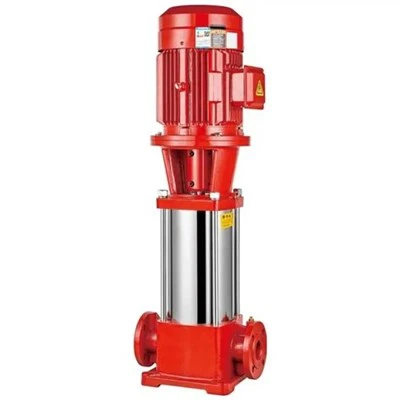
Let’s start with the basics most people don’t learn. A standard municipal water main is designed to deliver water at a certain pressure—usually between 40 and 80 PSI, depending on the location and the time of day. That pressure works fine for drinking water, washing cars, and most regular uses, but fire hoses and sprinkler systems need a lot more to do their job. Think of it like a garden hose: if you turn your outdoor spigot on just a little, the water trickles out and can’t reach the top of a two-story house. Crank the spigot all the way, and suddenly that same hose has enough force to knock over debris and reach the third floor. A fire pump is basically the spigot cranked all the way for fire protection equipment. It takes the existing water supply—whether it’s a municipal main, a water tank, or even a lake or river—and boosts that pressure to levels that meet national standards. Those standards aren’t arbitrary, either. NFPA 20, the National Fire Protection Association’s standard for the installation of stationary fire pumps, requires that systems deliver enough pressure to push water up to the highest floor of a building, through the length of the hose or piping, and still have enough force to extinguish flames. Without that boost, even a perfectly designed sprinkler system will sputter when it needs to work hardest.
But pressure isn’t the only piece. Volume matters too. A typical fire hydrant, for example, can only supply so many gallons of water per minute, depending on its size and connection to the main. High-rise buildings, industrial warehouses with massive floor spaces, or facilities that store flammable liquids need thousands of gallons per minute to control a fire before it spreads. A municipal main might not have that kind of volume available, especially if multiple buildings in the area are drawing water at the same time. A fire pump is engineered to deliver that consistent, high volume of water on demand, even when the main’s supply is limited. I saw this firsthand a few years ago when a large manufacturing plant in the Midwest had a small fire in their raw material storage area. The municipal main serving the plant was already at 60% capacity because of a nearby road construction project, but the fire pump on site kicked in and pulled from their 10,000-gallon underground water tank, boosting the pressure to 150 PSI and delivering 3,000 gallons per minute. By the time the fire department arrived, the sprinklers had already contained the blaze, and there was minimal damage. If that plant didn’t have a properly sized fire pump, the main would have struggled to supply enough water, and the fire could have destroyed half the facility.
Another key purpose of a fire pump is reliability, especially in areas where municipal power is spotty or during emergencies when the main is compromised. Most fire pumps are powered either by electric motors or diesel engines, with a secondary power source if the first fails. Electric pumps are the most common for commercial buildings, but in areas prone to hurricanes, tornadoes, or grid outages, diesel-driven pumps are non-negotiable—they can run for hours on a full tank of fuel, independent of the electrical grid. I recently worked with a hospital in the Southeast that replaced their old electric-only fire pump after a storm knocked out power for three days during a major hurricane. Their old pump couldn’t run without electricity, and while the storm didn’t cause a fire, the facility’s managers were terrified of what would have happened if a fire had broken out during the outage. Now their new system has a redundant diesel pump that automatically kicks on in 10 seconds or less if power is lost, and they run weekly test drills to make sure it’s ready to go at a moment’s notice. Fire protection isn’t something you can “set and forget,” and the pump is the component that makes that reliability possible.
Let’s also talk about compliance, because it’s a non-negotiable for every commercial and industrial facility. Building codes in almost every country require fire protection systems to be able to deliver water at sufficient pressure and volume, and fire pumps are the most cost-effective way to meet those codes. You could, in theory, build a larger main to a building, but that would require massive infrastructure changes, negotiating with the local water utility, and paying thousands of dollars in fees—all of which are way more expensive than installing a properly sized fire pump. For new construction, fire pumps let architects design buildings taller or larger than would otherwise be possible with standard municipal pressure, without the exorbitant cost of upgrading the entire water supply network. For existing facilities, replacing an outdated fire pump is often the difference between passing a fire marshal inspection and being forced to shut down parts of the operation until upgrades are complete. I’ve had conversations with small business owners who thought their 10-year-old pump was fine, only to find out during a routine inspection that it was delivering 30% less pressure than required. A quick pump replacement and calibration solved the problem, and they avoided a costly shutdown that would have hurt their bottom line.
There’s also a role fire pumps play in specialized settings you might not think about. For data centers, which store critical digital infrastructure that can be damaged by water as much as fire, fire pumps are designed to work with clean agent systems that use less water but still need pressure to distribute effectively. For oil refineries, chemical plants, and other facilities with high fire risk, fire pumps are often part of a redundant system—two or more pumps that can run independently in case one fails. I work regularly with a refinery in Texas that has four diesel fire pumps, each capable of delivering 5,000 gallons per minute. That way, if one pump needs maintenance or suffers a mechanical issue, the others can pick up the load, and the plant never has to pause operations for critical production. Even in residential settings, though large residential fire pumps are less common, multi-unit apartment buildings with 10 or more stories almost always have them, because the pressure from a municipal main isn’t enough to push water up to the top floor units during a fire.
What I’ve learned over the years as a fire pump supplier is that most people only pay attention to these systems when something goes wrong, and that’s a shame. The best fire pumps are the ones that never get noticed until they’re needed. They’re built to withstand extreme conditions—heat, cold, dust, and even physical impact—and they’re tested regularly to make sure they’ll perform when every second counts. Too often, I see facilities skimp on pump maintenance, putting off inspections or skipping test drills to save money, and that’s a risky gamble. A fire pump isn’t just a piece of equipment; it’s a safety lifeline for the people inside a building, the firefighters who respond, and the property that’s at risk.
If you’re a facility manager, architect, fire marshal, or business owner, you already know how important a reliable fire protection system is, but I hope this gives you a clearer picture of the fire pump’s central role. It’s not just another component—it’s the force that turns stored or supplied water into an effective fire extinguishing tool, the reason sprinklers and hoses work when they need to, the backup that kicks in when power or water mains fail, and the cost-effective way to meet code requirements and protect what matters most.

At the end of the day, choosing the right fire pump for your facility isn’t just about checking a box. It’s about having confidence that when an emergency hits, your protection system will work as intended. If you’re looking to upgrade an existing pump, design a fire system for a new building, or just have questions about how fire pumps work for your specific space, I’m here to help. Let’s walk through your needs, assess your current setup, and find a solution that keeps your people, property, and operations safe.
References
YBX3 Explosion-Proof Motor National Fire Protection Association. (2021). Standard for the Installation of Stationary Pumps for Fire Protection (NFPA 20).
Fire Protection Research Foundation. (2019). Fire Pump Performance and Reliability in Commercial and Industrial Settings.
Underwriters Laboratories. (2022). Standard for Stationary Fire Pumps (UL 448).
Taizhou Goodpump Trading Co., Ltd.
We’re well-known as one of the most professional fire pump enterprises in China, featured by quality products and good service. Please rest assured to buy discount fire pump in stock here from our factory. For quotation, contact us now.
Address: No.38, District 6, Zhengye Village, Lunan Street, Luqiao District, Taizhou City, Zhejiang Province, China
E-mail: tabvip666@163.com
WebSite: https://www.goodpump-cn.com/
