If you’ve ever worked in precision engineering, automotive manufacturing, or industrial automation, you’ve held a CNC turned shaft. They’re the unsung heroes of countless systems—small, cylindrical, precisely machined parts that keep everything from a car’s transmission to a robotics arm moving smoothly. For 12 years, I’ve run a CNC turned shafts supply business, and one question comes up in every client discovery call: Can CNC turned shafts be produced in high volume without sacrificing quality or lead times? CNC Turned Shafts
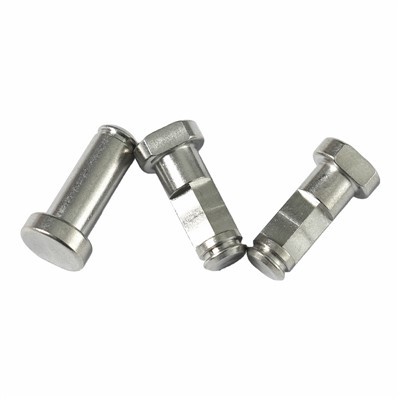
The short answer is a resounding yes—but it’s not a magic fix. It takes intentional process design, investment in the right equipment, and a deep understanding of how high-volume machining balances speed, precision, and consistency. Too often, I’ve seen small shops and even new buyers assume high volume means cutting corners. Over my career, we’ve shipped over 12 million CNC turned shafts to clients across North America and Europe, ranging from 10,000-piece orders for agricultural equipment manufacturers to 2.5 million-piece runs for power tool brands, so I know this space inside and out.
Let’s start with the core of what makes a CNC turned shaft suitable for high volume: the turning process itself. CNC turning is a subtractive manufacturing method where a rotating bar of material (steel, aluminum, brass, or even specialty alloys like 4140 chromoly) is fed into a machine, and a stationary cutting tool removes excess material to form the desired shape. Unlike manual turning, which relies on a machinist’s hands to guide the tool, CNC turning uses pre-programmed code to control every movement—down to the thousandth of an inch. That level of automation is non-negotiable for high volume, because manual work can’t replicate the same precision, speed, or consistency over tens of thousands of parts.
But here’s the mistake many new suppliers (or new buyers) make: they think any CNC lathe can handle high volume. Not all turning centers are built for sustained, high-output runs. We made our first big leap into high-volume production in 2014, when we invested in 17 multi-axis CNC turning centers—specifically sliding-head lathes and fixed-head turning centers with bar feeders. Sliding-head lathes, for example, can machine complex shafts with multiple diameters, threads, and grooves in a single setup, which cuts cycle time per part by 30% compared to older models that require multiple setups. For a high-volume run, less setup time per part means more parts shipped faster. We paired those machines with automatic bar feeders that can hold 12-foot bars of material, so operators don’t have to reload stock every 20 minutes. That’s small, but over a 100,000-piece order, it adds up to 8 to 10 hours of uninterrupted production time—hours we can use to ship more parts, not waste time on manual labor.
Material selection is another critical factor in high-volume CNC turned shaft production, and it’s one I see most clients overlook. The material has to work for the application, but it also has to machine consistently in high volumes. For example, if we’re making a shaft for a lawn mower’s drive system, we might use 1018 cold-finish steel. It’s affordable, machinable, and has enough strength for that use case. But if we tried to machine a high-volume run of 1018 steel that’s inconsistent in diameter or hardness, we’d run into tool breakage, uneven cuts, and 5% to 10% scrap rates—all of which kill high-volume efficiency. That’s why we implement a pre-material inspection step: every bar of steel, aluminum, or brass comes with a material test report (MTR), and we run 10 test cuts on the first bar of every shipment to check for hardness variations, grain size, and surface quality. If the material is off spec, we send it back before it hits the production line. Over the last decade, that step has cut our scrap rate for high-volume runs from an average of 4.2% to less than 0.8%. That’s not just better quality—it’s millions of dollars in cost savings for clients who don’t have to deal with rejections or delays.
Quality control is where high-volume CNC turned shaft production separates the good suppliers from the great ones. You can have the fastest machines and the best material, but if 5% of your parts are out of spec because you skipped inspections, your client’s assembly line will shut down—and that’s a problem no production speed can fix. For low-volume runs, a manual inspection of every 50th part works. For high volume? That method is impossible. We use a mix of automated in-process checks and periodic audits to keep our quality high. Every CNC turning center is fitted with in-process gauging tools that measure diameter, length, and thread depth while the part is still in the machine. If a cut is off by even 0.0005 inches, the machine automatically stops and alerts the operator, so we don’t waste time machining bad parts. We also run a 100% dimensional check on critical features (like bearing journals or mounting tabs) for every part in runs under 50,000 pieces, and for runs over 50,000, we do a 100% surface finish check plus statistical process control (SPC) testing on 1 in 1,000 parts. SPC lets us track trends over time—like if a cutting tool is starting to wear, so we can replace it before it produces 1,000 bad parts. Last year, one of our automotive clients had a last-minute 200,000-piece order for transmission shafts, and because of our SPC system, we caught a tool wear issue after only 12,000 parts, adjusted before more bad parts were made, and shipped the order two days ahead of their deadline. That’s the kind of reliability high-volume buyers need.
Lead time is another big concern when talking about high-volume production. Many small suppliers will quote a fast lead time for a 1,000-piece run, but then take 12 weeks for a 100,000-piece run because they don’t have the capacity. For us, we structure our production floor around cell-based manufacturing, where each cell is dedicated to a specific type of shaft or material. We have one cell for small, high-volume shafts under 2 inches long, another for medium-sized shafts for industrial machinery, and a third for specialty alloy shafts. This means we don’t have to rearrange our entire production line for a new order—we just assign it to the right cell, and that cell’s operators and machines are set up to handle it quickly. We also keep 12 weeks of raw material inventory for the most common shaft materials, so when a client places an order, we don’t have to wait for steel or brass to be delivered before starting production. Last quarter, we had a medical device client need 150,000 titanium shafts in 8 weeks—something most suppliers would have quoted 16 weeks for. We pulled material from our inventory, used our titanium-specific turning cell, and delivered on time, no compromises on quality.
But let’s be honest: high-volume CNC turned shaft production isn’t perfect, and there are limitations. For example, if a shaft has very complex features—like internal threads or undercuts that require multiple secondary operations (grinding, plating, heat treatment)—we might not be able to hit the same cycle times as a simpler shaft. But with modern multi-axis CNC turning, we can machine 90% of common shaft features in a single setup, so secondary operations are minimized. Another limitation: high volume doesn’t mean one-size-fits-all. Every client’s application is different, so we work with them to optimize the shaft design for manufacturability (DFM) before we quote. For example, a client once came to us with a shaft that had a very small diameter at one end, which would have required slower cutting speeds to avoid tool breakage, slowing down the entire run. We suggested a minor design change that kept the shaft’s function intact but let us use a standard tool, cutting cycle time by 18% for the run. That’s how we balance volume and quality: by partnering with clients early, not just when they need a quote.
Over the years, I’ve seen a lot of suppliers claim they do high-volume CNC turned shafts, but many cut corners on equipment, material, or quality control to hit low prices. That’s why we’ve built our business on consistency: a 100,000-piece run of shafts for a power tool maker will have the same dimensional tolerance, surface finish, and hardness as a 10,000-piece prototype run we did for the same client two years earlier. We recently did a blind test with a client where they sent 1,000 shafts from a competitor and 1,000 from us, and their quality team found that our parts had 0.7% scrap, vs. 4.1% from the competitor, and our lead time was 3 days shorter. That’s the kind of proof that makes high-volume buyers come back.
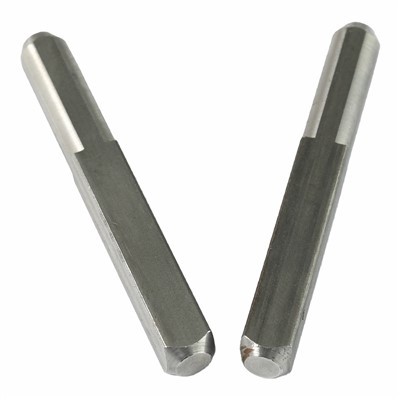
If you’re a procurement manager, design engineer, or operations director looking for a CNC turned shaft supplier that can handle high volume without sacrificing quality, reliability, or lead times, we have the equipment, experience, and processes to get the job done. We’ve shipped parts to clients in automotive, agriculture, medical, industrial automation, and consumer goods, and we’ve handled runs from 5,000 to 3 million pieces. We work with you to optimize design, keep material costs low, and deliver on time, every time. Don’t waste weeks on a supplier that will struggle with high volume—reach out to discuss your project today.
Custom Turned Parts References:
Kalpakjian S, Schmid S.R. Manufacturing Processes for Engineering Materials. 7th ed. Pearson; 2016
Groover M.P. Fundamentals of Modern Manufacturing: Materials, Processes, and Systems. 7th ed. Wiley; 2020
American Society of Mechanical Engineers (ASME). B4.2-2018: Geometric Dimensioning and Tolerancing (GD&T) for Machined Parts. ASME International; 2018
Huizhou Quanyi Precision Hardware Products Co., Ltd.
We’re well-known as one of the leading cnc turned shafts manufacturers and suppliers in China, featured by quality products and good service. Please rest assured to buy customized cnc turned shafts made in China here from our factory. Contact us for more details.
Address: Building A10, 7th Floor, Zhongchuangyingke 5G Industrial Park, Zhonghan Industrial Park, Tonghu Town, Huizhou City
E-mail: info@qycncturning.com
WebSite: https://www.qycncturning.com/
