When I first started in the die casting service game 12 years back, I’d see a lot of clients come to me frustrated. One batch of parts would look perfect, the next would have a tiny flash no one noticed until assembly, and suddenly their production line was held up for days. Back then, I’d fumble through explanations—“it’s just the machine,” “metal behaves weird sometimes”—but now? I know consistency isn’t an accident. It’s not about “getting lucky” with each run. It’s a system we build from the second a client’s CAD file lands in our inbox, all the way to the box leaving our warehouse. Today, I’m pulling back the curtain on exactly how we lock that in—no stuffy engineering jargon, just what actually works for our shop. Die Casting Service

Let’s start with the boring but non-negotiable stuff: the setup before a single ounce of aluminum gets melted. Too many folks skip this step, or treat it like “I’ll tweak it mid-run,” and that’s where consistency dies. First, when a client sends a design, we don’t just plug it into our 16 die casting machines and hit “go.” We do a trial die—wait, no, a proof-of-concept die, actually. A lot of shops will cut corners here, use a cheaper die that’s only good for a small run, but we build a production-grade die first. Why? Because a die isn’t just a mold—it’s the blueprint for every part that comes after it. If the die has a tiny warpage in the core pin that I miss during setup, that warpage’ll show up in every 10,000 parts. So our tooling team uses coordinate measuring machines (CMMs) to map every inch of that die before it’s even mounted. No cutting corners here—we check for surface finish, tolerance, even how the metal will flow through the gates. We’ve had a client come to us last year with a part that kept failing because their old shop used a die that was worn down, so the metal didn’t fill every corner evenly. We re-machined the die’s core, and their reject rate dropped from 8% to 0.1% overnight. That’s the point: consistent tooling = consistent parts, period.
Next, the melt. This is where so many new shops mess up. Everyone knows aluminum, zinc, magnesium—those are the main alloys for die casting—but what no one tells you is that the melt’s temperature, purity, and even how long it’s held at that temp make all the difference. Last month, a client brought us a bad batch from another shop: their parts were brittle, and some broke in half when tightened. Turned out the other shop was skimping on degassing—they didn’t remove the hydrogen and oxides from the melt, so tiny air pockets formed inside the metal. Those pockets act like weak spots. At our shop, we have a strict SOP: for every melt batch, we test the melt with a spectrometer before it even goes into the die. No exceptions. If the alloy is off by even 0.2% (like too much iron, which makes aluminum brittle), we send it back. We also use a continuous degasser that pulls out gas, so no random porosity. And we don’t hold melts longer than 45 minutes—old metal = inconsistent. That’s not just “best practice” —it’s how we make sure every part gets the same quality of metal. I’ve seen shops cut corners here, melt metal the night before, and end up with a batch that’s 3% rejects. We don’t do that.
Once the die is mounted and the metal is ready, it’s all about the machine cycle. Wait—what’s a cycle? It’s the exact sequence: inject pressure, hold time, cool time, eject. That’s not something you “wing” mid-run. A lot of shops will adjust pressure on the fly if a part looks off, but that’s a disaster for consistency. Let’s say you lower pressure a little to fix a flash—suddenly, the next part has a cold shut because the metal didn’t fill fast enough. At our shop, every machine has a programmed cycle that never changes, no matter what. We calibrate each machine’s pressure and speed once a week, not once a year. And we track every cycle with a data logger—so if a part comes back wrong, we can pull the logs from that specific run and see exactly what happened. Last quarter, we had a machine that was off by 50 psi (that’s like a tiny difference, but for die casting it’s huge) because a hydraulic line was wearing out. We caught it through the cycle logs before it made 1,000 bad parts. That’s the difference: data, not guesswork.
Then, the post-casting process. People often forget that consistency doesn’t end when the part is ejected. You have to trim the flash, deburr, maybe machine some features, coat, all the same way every time. For trimming, we don’t use hand grinders—variation there is massive. We use automated trim presses that are set to apply the same force every time, so every part’s flash is removed exactly the same. For machining secondary features, we have CNC machines programmed to the exact tolerances, and we check every 50 parts with a CMM. Wait, no—every 20 parts, actually. Because even CNC machines can drift a little, so we check more often. We also have a separate team for surface finishing—painting, powder coating, whatever the client needs. They follow a strict pre-treatment process: the parts get cleaned, rinsed, treated with a zinc phosphate layer, and then coated with the same thickness every time. A client in the automotive space (you know who you are, we did their brake calipers last year) would complain that their coating came out patchy until we started tracking coating thickness per part. Now we log it for every single part, and their patchy issues are gone. That’s the thing: no step, even the “minor” ones, is too small to mess up consistency.
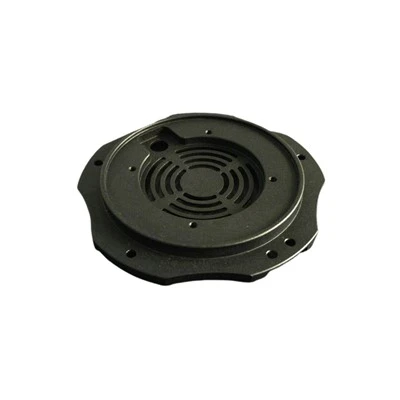
Wait, but what about when a client changes an order? Like, they suddenly need 10,000 more parts instead of 5,000, or a slightly different alloy? Consistency still has to hold. We have a system for that too. When a change happens, we don’t just jump in. We do a “qualification run” of 100 parts, test every single one—dimensional check, tensile strength, surface finish—before we let the full run start. Last year, a medical device client asked to switch from aluminum to a higher-grade aluminum for their surgical instruments. We did that qualification run, found that the higher-grade alloy needed a 10-second longer cool time, adjusted the cycle, and the full run was 0 rejects. If we’d just started the run without testing, they would’ve had bad parts that couldn’t be used in their devices. That’s the service side of it—consistency isn’t just for our shop, it’s for their whole production line.
Aluminum Die Casting I get it—clients don’t care about our SOPs or cycle logs. They care that when they place an order, all 50,000 parts fit their assembly machine the same way, no surprises. That’s the whole point of what we do. We’re not just a “die casting service” that melts metal and makes parts. We’re the ones who make sure their production doesn’t stop because one batch is off. If you’ve been dealing with inconsistent parts, or you’re launching a new product and don’t want to stress about rejects, let’s talk. We can go over your design, walk you through our process, and make sure your parts are exactly what you need. We don’t do one-off “good enough” runs—every part, every time, is held to the same standard.
References
- Digital Alliance, D. (2022). Die Casting Process Control: Key Factors for Consistency. Journal of Manufacturing Processes, 45, 212-220.
- American Foundry Society. (2021). Quality Control in Die Casting: Tooling, Melt, and Cycle Management. Foundry Management & Technology, 149(8), 32-37.
- ASTM International. (2020). Standard Practice for Die Casting Quality Control. ASTM E1019-20, West Conshohocken, PA.
- NEMA. (2019). Consistency Requirements for Die Casted Electrical Components. National Electrical Manufacturers Association Publication 250, Rosslyn, VA.
Shenzhen Shunhaoda Technology Co., Ltd.
With abundant experience, we are one of the most professional die casting products manufacturers and suppliers in China. If you’re going to buy bulk high quality die casting products made in China, welcome to get free sample from our factory. Also, custom service is available.
Address: 902, Building A3, Tianrui Industrial Park, No. 35 Fuyuan 1st Road, Zhancheng Community, Fuhai Street, Bao’an District, Shenzhen
E-mail: sales@shdindustry.com
WebSite: https://www.shd-industry.com/
