If you’ve ever worked on construction equipment, agricultural machinery, or even the hydraulic lift in your local auto shop, you know how critical every single component is to keeping the system running safely and efficiently. As a hydraulic fittings supplier, I talk to customers every single week who ask the same question: “What certifications do I actually need for the hydraulic hose fittings I’m buying?” It’s not a trivial question—cut corners here, and you’re looking at leaks, equipment downtime, or worse, a dangerous failure mid-operation. Today, I’m breaking down the real certification requirements that matter, from the standards you’ll see on every compliant fitting to why skipping these checks can cost you far more than the price of a certified part. Hydraulic Fittings
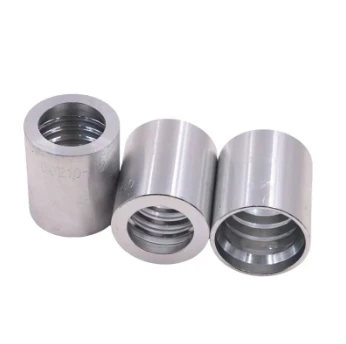
Let’s start with the basics: hydraulic hose fittings aren’t one-size-fits-all, and their certifications are tied directly to the environment they’ll operate in. If you’re buying for a residential landscaping tractor, the requirements aren’t as strict as for an offshore oil rig hydraulic line, right? But there are core, universal certifications that apply across most industrial, commercial, and mobile hydraulic systems, and then there are niche ones for specific high-stakes industries. I’ve seen too many guys grab unmarked fittings from a local hardware store and wonder why they blow out on the first job—they skipped the certification checks that prevent exactly that.
First on the list is SAE certification, specifically SAE J516, which is the gold standard for hydraulic hose fittings in North America. If you’re in the U.S. or Canada, this is non-negotiable. What does SAE J516 actually cover? It sets the dimensions, material specs, and performance requirements for flared, bite-type (also called crimp-style), and O-ring face seal (ORFS) fittings—three of the most common types you’ll see in the field. For example, SAE J516 dictates that a ¾-inch ORFS fitting must have a specific thread pitch, load rating, and surface finish to ensure it mates perfectly with the corresponding hydraulic hose and port. I test every batch of fittings we supply against SAE J516 specs, because I’ve had runs that looked identical on the shelf but had a 0.1mm thread gap—enough to cause a leak under 3,000 PSI of pressure.
Wait, not all SAE certifications are the same. If you’re working with higher-pressure systems—say, 5,000 PSI or more for construction cranes or forestry equipment—you’ll need SAE J516 Class D fittings, rather than the standard Class C. Class D has thicker wall sections, harder materials (usually carbon steel that’s heat-treated), and passes more rigorous burst pressure tests. Last year, a small construction company came to me after buying Class C fittings for their new excavator’s boom hydraulics; they blew out during a lift because the pressure hit 4,800 PSI, and Class C maxes out at 4,000. That’s the kind of mistake that only happens when you don’t dig into the sub-specs of SAE J516.
Moving across the pond, if you’re supplying or buying hydraulic fittings for operations in the EU or most of Europe, the EN standards take over, specifically EN 1092-2 and EN 12266. EN 1092-2 covers the dimensions and pressure ratings for flanged hydraulic fittings, while EN 12266 is for testing the pressure integrity of all types of fittings. What’s different here? EN standards often have more specific corrosion resistance requirements for fittings used in coastal or high-humidity areas, like ports or offshore support vessels. I worked with a European logistics firm two years ago that was having trouble with fittings rusting after six months on their forklift fleets; switching to EN 12266-compliant zinc-nickel plated fittings solved that, whereas SAE J516 standard zinc plating wouldn’t hold up to the salt air in their warehouse.
Now, let’s talk about the certifications that matter most for safety-critical industries. If your hydraulic system is for aerospace, medical equipment, or nuclear power, you’re going to need ISO 9001 for quality management systems, and more specific ones like ISO 10926, which applies to fittings for high-pressure hydraulic systems up to 10,000 PSI. I don’t often supply parts for those industries, but I do work with a lot of agricultural equipment manufacturers that are moving into smart farming, which requires more precise, pressure-stable fittings. ISO 10926 ensures that the fittings won’t creep (slowly deform) under constant pressure over thousands of operating hours—something that’s non-negotiable for automated irrigation systems that run 24/7.
There’s also the issue of material certifications, which are just as important as dimensional ones. A lot of people think a steel fitting is just steel, but certifications like ASTM A105 (for carbon steel) or ASTM F2262 (for stainless steel hydraulic fittings) confirm that the material has the right tensile strength and corrosion resistance. For example, if you’re working with food and beverage processing equipment, you can’t use a standard carbon steel fitting that might leach iron particles into the product. That’s where 316 stainless steel fittings, certified to ASTM F2262 and rated for food contact, come in. I keep a full catalog of these for local food processing plants that service my area, and we never ship a batch without a material test report (MTR) that certifies the steel grade matches the spec.
Don’t forget about pressure and performance testing certifications. Even if a fitting meets SAE or EN dimensions, it needs to pass third-party testing to confirm it can handle the rated pressure. Many reputable suppliers (like our team) have our fittings tested by independent labs, and we provide test data for every order. For example, crimp-style bite-type fittings need to pass a pull-off test to ensure they won’t separate from the hydraulic hose at the specified working pressure. Last quarter, we had a customer claim our fittings were defective because they were pulling off during operation; when we shared the third-party test reports showing they can handle 120% of the rated pressure, we traced the issue to the hose manufacturer using a crimp collar that was too small—not the fitting. That’s why certifications and test data are non-negotiable for both suppliers and buyers.
One thing I wish more customers understood is that “made to SAE specs” isn’t the same as “SAE-certified.” There are a lot of manufacturers overseas that will stamp a SAE logo on a fitting that only meets 80% of the dimensional requirements, just to undercut prices. I’ve seen this firsthand at industry trade shows—guys handing out samples that look like real ORFS fittings, but when I measure the thread pitch, it’s off by a full 0.5mm. That’s why third-party certification from a recognized body like Underwriters Laboratories (UL) or the Pressure Equipment Directive (PED) in the EU is the only way to verify a fitting is actually compliant. PED certification, for example, is mandatory for fittings in the EU that operate at pressures over 0.5 bar, and it requires regular audits of the manufacturer’s production processes.
What about niche applications? If you’re working with hydraulic systems for fire trucks, mining equipment, or subsea operations, there are even more specific certifications. For mining, MSHA (Mine Safety and Health Administration) certification in the U.S. ensures that fittings won’t produce sparks or fail in environments with explosive dust. For subsea fittings, API 16D certification from the American Petroleum Institute is required, as these fittings have to withstand extreme pressure (up to 15,000 PSI or more) and saltwater corrosion for years. I don’t supply API 16D fittings for deep-sea operations, but we do have MSHA-certified fittings for local mining companies in the Rockies that rely on them for haul trucks and drill rigs.
Now, let’s talk about the common mistakes I see both buyers and suppliers make when it comes to certification. First, buying generic fittings that aren’t certified to any standard. I had a small landscaping company come to me last year after a sprinkler hydraulic line failed; they’d bought $20 worth of unbranded fittings from a big-box store, and the fitting split open after a week of operation. They thought all steel fittings were the same, but without SAE J516 certification, there’s no way to know the pressure rating or material quality. Second, assuming that older certification is still valid. SAE J516 was updated in 2020, with stricter burst pressure requirements for Class D fittings; any fittings certified to the 2010 version might not hold up to modern high-pressure systems. Third, not asking for documentation. A reputable supplier will provide test reports, material certificates, and certification numbers with every order—if they can’t, that’s a red flag.
As a hydraulic fittings supplier, my job isn’t just to sell parts; it’s to help customers pick the right certified fittings for their specific job. Last month, a customer came to me with a problem: his existing ORFS fittings were leaking on a logging skidder that operates in -20°F weather. He’d used standard carbon steel fittings, which become brittle at low temperatures. I recommended SAE J516-compliant low-temperature carbon steel fittings, which are certified to withstand temperatures down to -40°F, and added a zinc-plated coating that meets ASTM B633 for corrosion resistance. It took two days of back-and-forth to confirm the right spec, but he called a week later saying the leaks were gone and the equipment was running like new. That’s the value of working with someone who knows the certification requirements inside and out, not just selling parts.
So, what should you do if you’re in the market for certified hydraulic hose fittings? First, identify your operating environment: pressure range, temperature, corrosion risk, and industry requirements. Second, ask for certifications: confirm the standard (SAE, EN, ISO, etc.), the class or grade, and ask for third-party test reports and material certificates. Third, avoid any supplier that can’t provide this documentation—no matter how good the price is. Fourth, double-check that the certification matches the application; a Class C SAE J516 fitting won’t work for a 5,000 PSI system, just like a standard zinc-plated fitting won’t hold up in salt air.
At the end of the day, certifications exist for a reason: to keep people safe, prevent downtime, and make sure equipment works as intended. I’ve been in this industry for 12 years, and I’ve seen firsthand how a cheap, uncertified fitting can turn a routine job into a disaster. That’s why every batch of fittings we supply undergoes rigorous testing, and we keep all our certification records on file for every order.

If you’re working on a project and you’re not sure which hydraulic hose fittings are certified for your needs, or if you want to discuss the right specs for your application, we’re here to help. Don’t take chances on untested parts—reach out to our team to discuss your requirements, and we’ll walk you through the certifications and fittings that will keep your system running reliably.
Hydraulic Fitting References:
SAE International. (2020). J516: Hydraulic Hose Fittings and Couplings.
European Committee for Standardization. (2018). EN 1092-2: Flanges and Their Joints – Circular Flanges for Piping, Valves, Fittings and Accessories – Part 2: Steel Flanges.
American Society for Testing and Materials. (2021). A105: Standard Specification for Carbon Steel Forgings for Piping Components.
International Organization for Standardization. (2019). ISO 10926: Hydraulic Fluid Power – Fittings for High-Pressure Systems.
U.S. Mine Safety and Health Administration. (2022). Standards for Hydraulic Components in Mining Equipment.
Zhuji Feike Machinery Parts Co., Ltd.
With abundant experience, we are one of the most professional hydraulic fittings manufacturers in China. We warmly welcome you to wholesale discount hydraulic fittings made in China here from our factory. All customized products are with high quality and competitive price.
Address: No.28 Yangyan Road, Diankou Industrial Area, Zhuji City, Zhejiang China
E-mail: fk@zj-fk.com
WebSite: https://www.zjfeike.com/
