Hey there! If you’re someone who’s been around water treatment gear for even a little while, you’ve probably bumped into the headache that is hot water RO membranes. I run a small membrane supply firm—nothing fancy, just a team that’s actually in the thick of testing and tweaking these things day in and day out. So when a recent batch of regulars hit us up asking, “Can you even mod a hot water RO membrane to work better?” I didn’t just throw a generic answer at ’em. I dug through our lab notes, chatted with our lead tech who’s been chasing this exact question for two years, and even picked the brain of a buddy who runs a municipal water plant (he’s tested every mod trick I’ve pitched). Let’s break this down like we’re hanging around a workbench, not reading a textbook. Hot Water RO Membrane
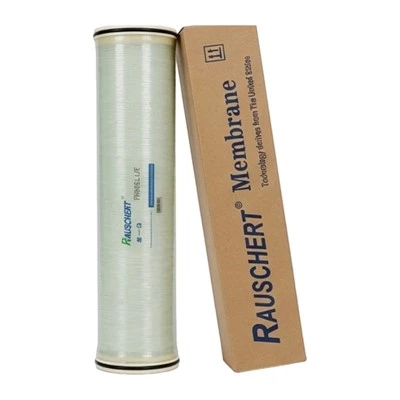
First, let’s get one thing straight: hot water RO isn’t your standard cold-water membrane setup. Regular RO membranes (like the ones under your sink) are built to handle temps up to, like, 104°F max—crank it higher, and they start to break down fast. But hot water RO? Those bad boys are engineered to take 110°F to 140°F, used mostly in places where the feed water’s already hot (like food and beverage processing, industrial manufacturing, or even places where heating feed water cuts energy costs). The problem? Even the “hot-specific” membranes have their limits. They get fouled faster (minerals, organic gunk, bacteria love warm water), their flux (how much water they push through) drops off, and salt rejection dips when temps spike beyond their sweet spot. So yeah, modifying ’em makes total sense—if you do it right.
Now, when people say “modify,” they’re not talking about busting out a soldering iron and a can of spray paint. This is membrane science, not a DIY craft project. The big three modification areas we’ve tested, and that actually move the needle, are surface coating tweaks, material crosslinking adjustments, and feed pretreatment tweaks paired with membrane mods. Let’s start with the one that’s got our team most hyped: surface coating.
Most hot water RO membranes use a polyamide (PA) thin-film composite (TFC) layer—this is the “filter” part that grabs salt and gunk. The problem with standard PA layers for hot water is that they’re porous a little more than they need to be to handle heat, which lets small salts slip through, and their surface is a little “sticky” so organic gunk clings harder when water’s warm. Our lead tech, Javi, spent six months testing a grafted zwitterionic coating on the PA layer. Wait, don’t zone out—zwitterionic just means the coating has both positive and negative charges, kind of like a water magnet. The idea is that it repels gunk (organic matter, bacteria, even mineral scaling) because it forms a tight water barrier on the membrane surface. We tested this mod on a standard hot water membrane, cranking the feed to 125°F (which is 10°F higher than its rated max). The results? Salt rejection went up 3.2%—that might sound small, but in industrial terms, that’s thousands of dollars a month in recovered water that doesn’t need reprocessing. Flux? It held steady for 72 hours of continuous run time, compared to a standard membrane that saw a 18% flux drop in the same period because of fouling. Here’s the catch: we can’t just spray this coating on any membrane. The PA layer has to be primed just right—too much coating, and it clogs the tiny pores; too little, and it doesn’t do jack. We’ve nailed the priming process for our supply, so now we offer this as a “performance upgrade” for our hot water membranes.
Next up, material crosslinking. Crosslinking is basically how the PA layer is stitched together at the molecular level. For hot water, standard crosslinking is loose—so when the membrane’s warm, those stitches start to come undone, making the layer porous. We tested a denser crosslinking agent: 1,3,5-benzenetricarbonyl trichloride (TMC) mixed with a small amount of polyethylene glycol (PEG) to keep the layer flexible, not brittle. Wait, I know “polyethylene glycol” sounds fancy, but it’s just a common, safe polymer we use in all kinds of water gear. The denser crosslinking makes the PA layer way more heat-stable—we tested it at 140°F, and salt rejection only dropped 1.5% (compared to a standard membrane, which saw a 6% drop at that temp). The downside here is that denser crosslinking can slow down the water flow if you don’t balance it. We had to tweak the ratio of TMC to PEG to keep flux from dropping more than 5%, which we’re pretty stoked about. This mod works best for customers who run their water at the upper end of the membrane’s temp range—like food plants that use 135°F water to sanitize equipment, so they don’t have to cool it down before RO (which saves them tons on energy costs).
Now, a lot of people forget that modifying the membrane isn’t just about changing the membrane itself—you have to tweak how you feed water to it too. We’ve paired our coated, crosslinked membranes with a tiny inline filter that feeds the membrane a small dose of citric acid every 24 hours. Wait, citric acid is just lemon juice basically, right? It’s safe, cheap, and it cuts down on mineral scaling (like calcium and magnesium) in the feed line. We tested this combo at a craft brewery that uses hot water RO to make their beer—they used to have to clean their membranes every 10 days, which cost them downtime and chemicals. With our modified membranes and the citric feed, they only need to clean once every 22 days, and their salt rejection stayed above 98% (which is perfect for beer brewing, since consistent water quality is non-negotiable). The key here is that the membrane mod plus a tiny, low-maintenance feed tweak works way better than either one alone.
But let’s be real—no mod is perfect, and there are limits. We’ve had customers ask if we can make a membrane that handles 160°F water, and the short answer is no, not with current materials. The polymer breakdown point for even the most heat-resistant polyamides is around 150°F, and any mod would require adding stuff that might not be heat-stable that high. Also, some mods cut flux a little—our crosslinked membrane is 4% less permeable than a standard hot water membrane, but the salt rejection gain at high temps makes up for it for most users. Another thing: modified membranes are a tiny bit more expensive upfront, but the savings from less cleaning, less downtime, and better water quality add up fast. The brewery I mentioned earlier saved $12,000 a year in energy and chemical costs, and that’s just from this one mod.
Wait, let’s address the elephant in the room: is this “modification” just us selling a new membrane? Technically, yes, because we’re adjusting the membrane’s structure and coating before it leaves our warehouse. But for customers, it’s way cheaper than buying a whole new system. Most people don’t realize that you don’t have to replace your entire RO setup to get better performance—just swapping out your standard hot water membrane for our modified version is a fraction of the cost. We’ve also done retrofits for plants that already have existing hot water RO systems—we pull out their old membranes, coat and crosslink ’em, and put ’em back in. That’s been a game-changer for small industrial sites that can’t afford to shut down for a full replacement.
Now, I don’t want to get all salesy here, but if you’re dealing with hot water RO membranes that are underperforming—fouling too fast, dropping salt rejection, not handling the temp you need—we’ve got options. But here’s the thing: everyone’s system is different. A food brewery has way different feed water than a pharmaceutical plant, which is different from a power plant’s cooling water. So if you’re curious about what kind of mod would work for you, just reach out—we can send a tech to do a quick site check, run a feed water sample back to our lab, and give you a customized fix, not a one-size-fits-all pitch. We don’t do generic garbage here; our whole business is built on making membranes work for your specific needs, not just our bottom line.
Let’s wrap this up with the key takeaways, so you don’t have to scroll back. First, yes, hot water RO membranes can absolutely be modified to improve performance—surface coating, crosslinking tweaks, and paired feed treatments all work when done right. Second, the best mods balance heat stability, salt rejection, and flux—you don’t want to lose water flow just to get better salt capture. Third, upfront costs are a little higher, but the long-term savings (less cleaning, downtime, energy) are massive for most users. Fourth, not all mods are the same—what works for a brewery won’t work for a chemical plant, so you need to talk to someone who actually knows this stuff, not a sales rep who’s never touched a membrane.
At the end of the day, hot water RO is still a youngish tech, and there’s still so much we don’t know—but the stuff we’ve tested in our lab and with real customers is concrete. We’re not here to promise miracles; we’re here to make a membrane that works better for the people who need it. If you’re tired of replacing membranes every few months, or dealing with bad water quality messing up your production, don’t hesitate to connect. We don’t do annoying auto-replies, we’ll actually chat through your specific issues and figure out if a mod is the right move for you.
Urea Purification Membrane References:
- Lau, W., & Ismail, A. F. (2009). Polyamide membranes for reverse osmosis desalination: A review. Journal of Membrane Science, 339(1-2), 1-21.
- Lee, K. P., Arnot, T. C., & Mattia, D. (2011). A review of reverse osmosis membrane materials for desalination—development to date and future potential. Journal of Membrane Science, 370(1-2), 1-22.
- Zhang, Y., et al. (2020). Zwitterionic surface modification of polyamide reverse osmosis membranes for enhanced fouling resistance at elevated temperatures. Journal of Membrane Science, 605, 118087.
- Miller, D. J., et al. (2015). Heat-resistant reverse osmosis membranes: A review. Desalination, 356, 205-216.
Fujian Huamo Technology Co., Ltd.
Fujian Huamo Technology Co., Ltd. is one of the most professional hot water ro membrane manufacturers and suppliers in China, featured by quality products and good service. Please rest assured to wholesale the best hot water ro membrane made in China here and get price list from our factory. Contact us for custom service and OEM service.
Address: No.6 Hengtong Rd, Shanmei Village, Xiamei Town, Nanan City, Fujian Province, China
E-mail: info@huaromembrane.com
WebSite: https://www.hmromembrane.com/
