Hey there, Mill and Mill Auxiliary Parts

Let’s cut to the chase. If you’re running a mill, or buying auxiliary parts for one, you know how messy tech changes can be. Five years ago, a new bearing for your rolling mill might have been just a “more durable” upgrade. Now? It’s part of a sensor network that alerts you to a fault before it breaks. If you’re stuck using parts that are a decade old, you’re leaving money on the table—and risk too. I’ve been in this game for 12 years, running a shop that supplies mill and mill auxiliary parts, and I’ve seen guys get left in the dust because they didn’t keep up. Today, I’m gonna tell you how to actually do that—no fancy jargon, no useless checklists, just stuff that works.
First off, stop scrolling LinkedIn for “tech trends” every Monday. That’s noise, not action. I used to waste hours a week reading posts about “Industry 4.0 for dummies” and half of it was just people selling expensive software no small mill can afford. The real way to keep up starts with paying attention to what’s actually breaking on your line, and talking to the guys fixing it. Let me explain. A couple months back, a customer of mine—small steel mill out in Ohio—called me panicking because their old drive motor’s encoder died again. They’d been using the same encoder for 10 years, no update. Turns out, the new encoders that came out two years ago aren’t just better at measuring speed—they have a tiny built-in sensor that tracks temperature, vibration, and even how much load the motor’s taking. The part was only $20 more than the old one, and now that customer hasn’t had a motor breakdown in months. That’s not “keeping up with tech”—that’s swapping out a part that’s obsolete for one that’s been designed with current mill needs in mind.
So step one: Audit your existing parts and pain points, don’t chase shiny new tech. Let’s break that down. Grab your maintenance guys (they’re the ones who actually deal with this stuff every day, not the office manager) and sit down for an hour. Write a list of every part that fails more than twice a year, every line that has a 2-hour unplanned shutdown because a bearing seized, every auxiliary part that you’re replacing just because there’s a “more efficient” version. For us, this meant noticing that a lot of mills were complaining about conveyor belt rollers that got ruined by dust and moisture. We didn’t invent a new roller—we partnered with a machining company to tweak the seal design, adding a labyrinth shield that keeps debris out. It’s not rocket science, but it’s tech applied to a real problem. That’s how you keep up. You don’t have to build a robot arm that welds parts—you just have to adapt the parts you already use to fit what mills actually need right now.
Next, build a network of people who are actually in the mill parts game, not just industry influencers. I don’t mean joining a 100-person Facebook group where everyone posts their parts catalogs. I mean, go to the local mill trade shows, skip the keynote speeches and go talk to the booths that aren’t just selling big machinery—talk to the guys selling auxiliary parts. Last year, I went to a steel show in Pittsburgh and struck up a conversation with a rep from a parts testing lab. They told me about a new composite material for pump impellers that can handle 20% more corrosion than the old metal ones. I brought that back to my team, tested it, started supplying it to our customers, and now three of those mills have cut their pump maintenance costs by 15%. If you only talk to your own customers, you’ll only know what they tell you. Talk to the guys who design the parts, test the parts, and fix the parts for 10 different mills—they’ll tell you what’s next before it’s on a billboard.
Another big one: Don’t sleep on small, incremental upgrades in your parts, not just full overhauls. A lot of people think “new tech” means replacing your entire mill line. No, it means upgrading one part at a time. Let’s talk about the auxiliary parts that don’t get the hype—like pressure regulators, roller bearings, or lubrication pumps. Five years ago, all pressure regulators were mechanical. Now, you can get an electronic pressure regulator that adjusts automatically based on your mill’s load. If your line is running at half speed, it cuts pressure; if you ramp it up, it kicks up. We started supplying these to a customer in Indiana last year, and their energy bill dropped by 12% in three months. That’s tech that directly impacts your bottom line, and it’s just a part swap, not a mill replacement. The same goes for lubrication systems. Old ones use fixed-cycle pumps that pump oil whether you need it or not. New ones have sensors that tell the pump to only add oil when a part is running. That’s not a huge investment, but it’s tech that changes how your mill works.
Wait, but what about the stuff that feels too complicated? Like IIoT (Industrial Internet of Things) sensors. I know, it sounds like something only big mill conglomerates can afford. But here’s the thing: most of the time, you don’t need a full IIoT network. You just need a small sensor to stick on the part that fails the most. For example, our most popular bearing upgrade now is a standard bearing with a $15 add-on sensor that sends a text to your maintenance guy if the bearing’s vibration gets too high. No fancy software, no monthly fees beyond the $15 part, just a heads up before it seizes. I’ve had small mill owners tell me they thought IIoT was out of their price range, but this sensor is cheaper than the overtime they pay when a line shuts down for 4 hours. Tech doesn’t have to be complex to be useful—you just have to pick the parts that fit your scale.
Also, pay attention to regulations, because those drive tech changes faster than anything. A lot of countries have new rules about energy use, emissions, and worker safety. Those rules force part manufacturers to update their designs, and if you’re still using parts that don’t meet those new standards, you could get fined. Last year, the EPA updated rules for mill equipment about air quality from lubrication systems. A bunch of our customers were still using old vented pumps that released small amounts of oil mist. We started supplying closed-loop pumps that capture that mist, meet the new regulations, and even recapture 80% of the oil for reuse. It’s a win-win: they don’t get fined, and they save money on oil. If you ignore these regulatory pushes, you’ll be stuck using obsolete parts until you get a big fine, and then you’ll have to play catch-up.
Now, I know what some of you are thinking: “This sounds like a lot of work. I don’t have time to audit my parts, go to trade shows, talk to suppliers.” Fair enough. That’s where your parts provider comes in. That’s why we exist. We don’t just send you a catalog of parts that worked 5 years ago. We do that audit for you. We talk to the maintenance teams, we track which parts are failing most, we test new materials and sensors, and we bring the right upgrades to you. Last quarter, we sent a free parts review to 20 of our small mill customers. We looked at their auxiliary parts, found 8 different upgrades that would save them 10-20% on maintenance, and didn’t push anything they didn’t need. One customer switched out their old conveyor rollers for our sealed composite ones, saved $1,200 a year on replacements, and cut downtime by 3 days. That’s the value of a supplier that’s actually keeping up with tech, not just selling you the same old stuff.
Wait, but let’s be real, there are pitfalls here. A lot of suppliers will push “new tech” just to charge you more. They’ll tell you you need a $500 sensor when a $50 one works. So how do you avoid that? Test small. Don’t replace all your rollers at once—buy 10 new ones, try them for 3 months. See if they actually last longer, see if they reduce downtime. If they do, swap the rest. If not, move on. And if your supplier won’t let you test small? Find a new supplier. At our shop, we have a 3-part test policy: if a customer wants to try a new part, they buy 5 pieces first. If it works for 2 months, we cover the rest. That way, you don’t get stuck with a bunch of parts that don’t work, and we don’t waste time on a part that’s not right.
Another pitfall: Don’t buy parts just because they’re labeled “Industry 4.0” or “smart.” We’ve seen a bunch of those parts come out that have extra features no mill actually needs. Like, a lubrication pump that has a Wi-Fi connection to a app that tracks your oil usage—fine, but you don’t need Wi-Fi if you just want it to pump oil. We skip those. We only supply parts that solve a specific problem: less downtime, lower maintenance, better compliance. No fluff, no extra features you’ll never use. That’s how you keep up without wasting money on gimmicks.
Let me wrap this up, because I know you’re busy. Keeping up with new mill auxiliary parts isn’t about learning every new tech trend, it’s about connecting what’s actually changing in your mill to the parts that make it run. Audit your pain points, talk to your maintenance team, build a network of suppliers and trade connections, test small, and don’t fall for gimmicks. And if you don’t have time to do all that? Reach out. That’s what we’re here for. We don’t just sell parts—we help mills run better, by making sure their auxiliary parts are the right ones for today, not 5 years ago.
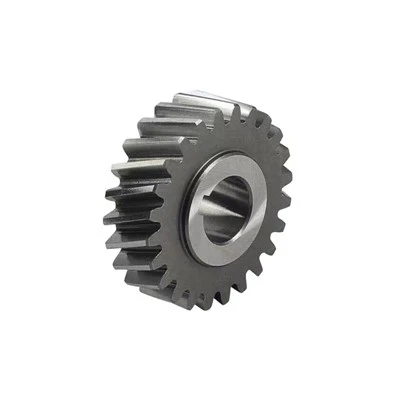
Don’t wait until your next breakdown to upgrade. Let’s talk, so we can figure out exactly what parts will save you time, money, and headaches.
Guide and Water Cooling Parts References:
- American Iron and Steel Institute. (2023). Mill Auxiliary Part Performance Trends for Small to Medium Steel Operations. AISI Technical Report.
- National Institute for Occupational Safety and Health. (2022). Industrial Sensor Applications for Predictive Maintenance in Manufacturing. NIOSH Publication.
- U.S. Environmental Protection Agency. (2023). Updates to Stationary Source Emission Standards for Metal Processing Equipment. EPA Regulatory Bulletin.
- Machinery Lubrication Magazine. (2024). New Composite Materials for Conveyor and Pump Components. ML Industry Review.
- Market Research Future. (2023). Global Mill Auxiliary Parts Market: Tech Advancements and Growth Projections. MRF Industry Report.
Jingjiang Jingyi Metallurgical Technology Co., Ltd.
With abundant experience, we are one of the most reliable mill and mill auxiliary parts manufacturers and suppliers in China. We warmly welcome you to wholesale customized mill and mill auxiliary parts made in China here from our factory. If you have any enquiry about quotation, please feel free to email us.
Address: No.5 Jianghe Road, Xinqiao Town, Jingjiang City, Jiangsu Province
E-mail: Lcbin1974@163.com
WebSite: https://www.jymetallurgical.com/
