If you’re running a truck-mounted crane operation, you already know how crucial precision, safety, and efficiency are to every lift—whether you’re hoisting steel beams for a residential construction site, placing HVAC units on a commercial roof, or moving heavy machinery at a warehouse yard. For years, operators relied on wired controllers tethered to the crane’s cab, but those systems came with real downsides: limited range that forced operators to stay within a narrow line of sight, tangled cables that could snag on obstacles or tools, and restricted movement that made it hard to adjust for wind shifts or uneven loads in real time. That’s why remote-control options for truck-mounted cranes have evolved so much over the last decade, and as a truck-mounted crane supplier, I’ve seen firsthand how choosing the right system can make or break a job. Today, I’ll break down the most common remote-control options, how they work, and which one might fit your operation best. Truck-mounted Crane
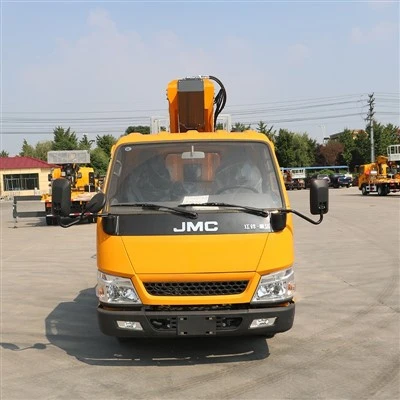
First, let’s clarify what a crane remote control does, because not all remote systems are created equal. At their core, these systems replace wired controls to let operators move away from the cab, giving them an unobstructed view of the lift area—something that’s almost impossible when you’re craning a load around a building or between pieces of equipment. But each remote type relies on different technology, and each has its own set of pros, cons, and use cases. Let’s start with the most traditional option still in use today: radio frequency (RF) remote controls.
RF remotes are the workhorses of the crane industry, and for good reason. They operate on low-power radio waves that don’t require a direct line of sight between the remote and the crane’s receiver unit, which means they can work around obstacles like buildings, trees, or even other trucks on a jobsite. Most modern RF crane remotes use industrial 2.4 GHz or 900 MHz frequencies, which are licensed for commercial use and avoid the interference that plagues consumer Wi-Fi devices. The average range for an RF remote is between 100 and 300 meters, which is more than enough for most standard truck-mounted crane jobs.
From my experience as a supplier, RF remotes are popular with small to mid-sized fleets because they’re affordable, durable, and low-maintenance. They’re built to hold up to the dust, rain, and occasional drops that come with a jobsite environment—most have an IP65 rating, meaning they’re dust-tight and can handle being splashed with water. The receiver unit mounts right on the crane’s control panel, so wiring installation is straightforward, usually taking less than an hour to set up on a new or existing crane. The only real downside of RF remotes is that, unlike some other options, they’re prone to radio interference in extremely dense jobsites—think a city construction zone with dozens of other radio devices, forklifts, and heavy equipment. If you’re working in a tight, crowded area, you might run into signal dropouts or lag, which is where the next option comes in handy: Wi-Fi remote controls.
Wi-Fi remotes, as the name suggests, use standard Wi-Fi signals to communicate between the remote and the crane’s receiver. Most industrial crane Wi-Fi systems operate on 5 GHz frequency, which is less crowded than the 2.4 GHz band used by most consumer devices, reducing interference in dense environments. The range for Wi-Fi remotes can go up to 500 meters, which is double the range of most RF systems, and some high-end models even let you connect multiple cranes to a single Wi-Fi network for coordinated lifts.
I’ve seen a lot of general contractors opt for Wi-Fi remotes on large commercial jobs because of their extended range and the ability to add extra features. Many Wi-Fi systems come with integrated cameras that feed live video directly to the remote’s screen, so operators can see exactly where the load is going—even if they’re standing around a corner or on a different level of a building. That said, Wi-Fi does have its weaknesses. It’s more sensitive to physical obstacles than RF: a steel beam or a truck trailer can block a Wi-Fi signal completely, leading to sudden drops in control. Also, while the hardware isn’t drastically more expensive than RF, the setup can be a bit trickier, especially if your jobsite doesn’t have a reliable Wi-Fi network already in place. I always advise customers who are considering a Wi-Fi remote to test the signal in their typical work area first—set up the receiver on the crane, walk around the jobsite where you’d operate, and check for dead spots before making the investment.
The third remote-control option, and the one that’s been gaining the most traction in the last five years, is Bluetooth-enabled remote controls. Bluetooth remotes are smaller, lighter, and much more power-efficient than RF or Wi-Fi systems, because they’re designed for short-range communication—usually between 10 and 50 meters. At first glance, that might seem too short for a crane, but there’s a big niche for Bluetooth remotes in the truck-mounted crane world. They’re perfect for light-duty jobs, like moving small loads around a warehouse, installing patio materials, or loading and unloading landscaping equipment, where operators don’t need to stand hundreds of feet away from the crane.
What I like most about Bluetooth remotes is their portability. Most are the size of a smartphone or a small walkie-talkie, so operators can clip them to their harness or work vest without adding extra bulk. They’re also super easy to set up—just pair the remote with the crane’s receiver once, and you’re good to go, no complex configuration required. Another plus: Bluetooth doesn’t suffer from the same frequency interference as RF or Wi-Fi in small, cluttered spaces, because it uses a low-power, dedicated signal that doesn’t bleed over into other devices. The tradeoff, obviously, is the limited range. If you’re lifting a 20,000-pound steel beam to the third floor of a building, a 50-meter range won’t be enough, but for 80% of the light-duty truck-mounted crane jobs my customers take on, Bluetooth works perfectly.
Beyond these three core options, there are a couple of specialized remote-control systems worth mentioning, especially for customers with unique lift needs. One is the gyroscopic remote, which uses built-in sensors to track the operator’s hand movements instead of physical joysticks. These are often used in tight, high-precision lifts—like placing a rooftop HVAC unit on a narrow ledge—where small, subtle adjustments are critical. Gyroscopic remotes take a little time to get used to, but once operators master them, they can make moves that wired or even standard RF remotes can’t pull off with the same level of control.
Another specialized option is the telematics-enabled remote, which connects the crane’s remote system to a cloud-based platform. These remotes don’t just let you control the crane—they track usage data, monitor maintenance needs, and even send alerts if there’s a problem with the crane’s hydraulics or signal strength. For fleet managers, this is a game-changer: you can see how each operator is using the crane, when it needs a service, and even troubleshoot minor issues remotely without having to send a technician out to the jobsite. I’ve had several long-term customers add telematics remotes to their fleets, and they’ve reported a 15-20% reduction in unplanned downtime just from being able to catch small problems before they turn into big ones.
Of course, when choosing a remote-control system, there’s more to consider than just the technology. Safety is the biggest factor, and all modern crane remotes come with built-in safety features that are non-negotiable, according to OSHA and industry standards. Look for remotes with an emergency stop (E-stop) button that’s easily accessible—either on the remote itself or a separate lanyard that the operator clips to their body, so if they stumble or step away from the remote, the E-stop is within reach. You’ll also want a system that has “fail-safe” technology: if the signal between the remote and the crane is lost for more than a split second, the crane automatically stops all movement to prevent accidents.
Durability is another key point. Crane jobsites are harsh places—dust, mud, rain, and occasional drops are par for the course. Make sure any remote you choose has an IP65 or higher rating, and that the buttons and joysticks are sealed to keep out debris. Cheaper remotes might work for a few months, but they’ll break down quickly in heavy use, costing you more in repairs and downtime in the long run.
Cost is also a factor, but it’s important to think beyond the upfront price. A $500 RF remote might seem cheaper than a $1,500 Wi-Fi remote, but if you’re working in a lot of crowded jobsites with signal interference, you’ll end up wasting time dealing with signal dropouts, and you might even have to redo jobs to fix mistakes caused by poor control. On the other hand, a high-end telematics remote might cost more upfront, but the savings from reduced downtime and better maintenance can add up to thousands of dollars a year for larger fleets.
As a truck-mounted crane supplier, I’ve seen too many operators stick with outdated wired controls because they’re familiar with them, or pick the cheapest remote without testing it first, only to regret it on their next big job. The right remote doesn’t just make lifts easier—it makes them safer, faster, and more efficient. If you’re not sure which option fits your operation, take the time to test a few systems on a small job first. Most reputable suppliers will let you demo a remote for a day or two, so you can see how it works in your typical work environment.
At the end of the day, every operation is different. If you’re mostly doing light-duty residential jobs, a Bluetooth remote might be the perfect fit. If you’re lifting heavy materials on large city construction sites, an RF or Wi-Fi remote with a camera is going to be your best bet. And if you manage a fleet of cranes, a telematics-enabled system will help you keep everything running smoothly.
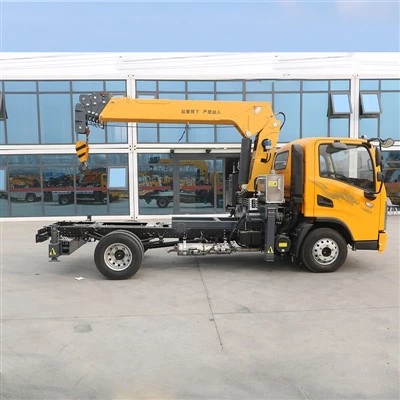
If you’re ready to upgrade your truck-mounted crane’s remote control, or you have questions about which system is right for your specific needs, don’t hesitate to reach out. We work with operators of all sizes, from single-truck owners to large construction companies, to find the right equipment that fits their budget and work style.
Truck-mounted Crane References
- Occupational Safety and Health Administration (OSHA). “Crane Remote Control Safety Standards for Construction and Industrial Operations.” 2022.
- National Association of Heavy Equipment Manufacturers (NAHEM). “2023 Industrial Crane Remote Control Market Report: Trends, Use Cases, and Performance Metrics.”
- International Organization for Standardization (ISO). “ISO 10252: Cranes – Remote Control Systems – Safety Requirements.” 2021.
- Truck Mounted Crane Manufacturers Association (TMCMA). “Best Practices for Remote Control System Integration on Light and Medium-Duty Truck-Mounted Cranes.” 2022.
Jining Baoliwei Construction Machinery Sales Co., Ltd.
Jining Baoliwei Construction Machinery Sales Co., Ltd. is one of the most reliable truck-mounted crane manufacturers and suppliers in China, featured by quality products and good price. Please rest assured to buy durable truck-mounted crane made in China here from our factory. Customized orders are welcome.
Address: South of Provincial Highway 338, west of Jiacheng Road, Jining Economic Development Zone, Jining City, Shandong Province, China
E-mail: 17853735607@163.com
WebSite: https://www.baoliweicrane.com/
