If you run a machine shop, sign shop, or any business that relies on consistent, precise cuts, you know a waterjet’s nozzle is far more than a small, disposable part—it’s the core of your cut quality, productivity, and long-term operating costs. As a waterjet cutting machine supplier, I talk to customers every week who ask the same question: “How often should I replace my waterjet nozzle?” The short answer isn’t one-size-fits-all, though. It depends on how hard you run your machine, what materials you cut, and how well you maintain your setup. Let’s break this down with real, on-the-ground insight I’ve gathered working with hundreds of customers over the past 12 years. Waterjet Cutting Machine
First, let’s start with the basics to set context. A waterjet nozzle, also called an orifice, is the tiny diamond (or synthetic sapphire) tip that controls the flow of high-pressure water, often mixed with abrasive grit like garnet. Even the smallest wear—just a few thousandths of an inch—can throw off your cut. A nozzle with a worn, irregular opening will produce a skewed, jagged edge, require more abrasive to make a pass, and slow down your cutting speed to fix mistakes. For high-volume shops, a worn nozzle can add thousands of dollars in wasted material and labor every month.
So, how often does nozzle wear happen? Synthetic sapphire nozzles, the most common standard we supply for entry to mid-volume machines, typically last between 100 and 150 hours of continuous cutting. For low-volume users—say, a small shop that runs 20 hours a week, cutting acrylic or thin aluminum—that translates to a replacement every 6 to 8 months. But diamond nozzles, the workhorse for high-volume industrial cutting (we supply these for shops running 24/7, cutting steel, stone, or thick composites), can last anywhere from 500 to 1,000 hours. That’s a huge range, and it’s not just the material that drives it—usage habits play a bigger role than most people realize.
Let’s get into the real-world factors that change your nozzle lifespan. First, abrasive type. Garnet is the standard abrasive, but not all garnet is equal. Low-grade garnet that’s been crushed too fine, or has too many sharp, jagged edges, wears down a nozzle much faster than high-grade, properly sized garnet. I once had a customer who bought cheap garnet to cut costs, only to have his nozzles wear out in 40 hours instead of 120. That $50 per cubic yard savings turned into $300+ in extra nozzle replacements every month—hardly a win. Another big factor: water quality. Tap water with high mineral content, like calcium or magnesium, can erode a nozzle from the inside out over time, even if you’re using good abrasive. We always recommend installing a water softener and a filter system for machines running more than 40 hours a week—this small upfront step doubles nozzle lifespan for most users.
Then there’s operating pressure and cutting speed. If you run your waterjet at the maximum 60,000 PSI (or even 90,000 PSI for abrasive waterjets) every time you run a job, that will wear a nozzle faster than if you dial it back to 50,000 PSI for thinner materials. I tell customers: match pressure to your material. For cutting ½-inch acrylic, 55,000 PSI works just as well as 60,000, and it cuts wear dramatically. Similarly, pushing your cutting speed to the absolute limit to squeeze out more parts per hour adds stress to the nozzle. It’s a balancing act: speed that’s too fast leads to sloppy cuts, but speed that’s too conservative wastes time—and both wear nozzles faster.
Now, how do you know when it’s actually time to replace your nozzle, instead of just guessing? We teach our customers a few simple, easy-to-spot signs that don’t require fancy testing equipment. First, check your cut quality. If you see a slight taper on your part edges—where the top of the cut is wider than the bottom, or vice versa—that’s a classic sign of nozzle wear. A new nozzle produces a consistent, straight cut; a worn one lets the high-pressure water spray expand sideways, leaving a sloped edge. Next, watch your abrasive consumption. If you notice you’re using 10-15% more garnet than you did with a new nozzle, that’s a red flag. The irregular opening from wear means the water jet isn’t concentrated enough, so you need extra abrasive to cut through the same material. Finally, track your cut time for consistent jobs. If a part that used to take 2 minutes now takes 2 minutes 20 seconds, and you haven’t changed your machine settings, that nozzle has lost its precision.
A common mistake I see is waiting for a total nozzle failure to replace it. A nozzle that’s just slightly worn will cost you way more in wasted material and labor than a new one will. For example, a custom sign shop cutting ¼-inch aluminum might spend $200 in material to fix a bad cut from a worn nozzle every week. Replacing a $25 nozzle every 2 months is $60 a year, versus $10,400 a year in wasted material. That’s an enormous difference, and it’s why our data shows that customers who replace nozzles proactively (at the first sign of wear) cut their total operating costs by 12-18% annually.
What about maintenance to extend nozzle life? This is something we walk every new customer through when we set up their machine, and it makes a bigger difference than you might think. First, flush your water system daily. When you shut down your machine for the night, run pure water through the nozzle for 30 seconds to clear out any leftover abrasive that could get trapped and cause wear. We’ve seen nozzles last 20% longer just from this one habit. Second, inspect your nozzle filter weekly. A clogged filter forces the water pressure to spike, which accelerates wear. We recommend a 10-micron filter for most shops, and replace it every 50 hours of operation. Third, store your nozzles properly. Don’t leave them loose in a toolbox, where they can get scratched or knocked around. Keep them in a protective case, and label them with their installation date—this makes it easy to track how long each one has been in use.
For high-volume industrial customers, we have a few extra recommendations. If you run a 24/7 shop, rotating two nozzles is a game-changer. Install a quick-change nozzle assembly, so you can swap a worn nozzle in 2 minutes, instead of 10, and use the second nozzle while the first is resting. This cuts downtime dramatically and extends the lifespan of each nozzle by letting them cool down between uses. We also offer a nozzle monitoring add-on for advanced waterjet machines that tracks pressure spikes and cut time in real time, alerting you when a nozzle is starting to wear before it affects your parts. This is especially useful for shops that produce high-value parts, like aerospace components or custom stone countertops, where a bad cut can ruin a $1,000 piece of material.
Let’s talk about real customer examples to make this concrete. A year and a half ago, we worked with a large automotive parts shop in Detroit that was replacing nozzles every 80 hours, which was costing them $1,200 a month in parts alone. They were using low-grade garnet and running their pressure at 90,000 PSI for all jobs. We worked with them to switch to high-grade garnet, dial their pressure to 75,000 PSI for most steel cuts, and add a daily water flush. Now their nozzles last 350 hours, a 337% improvement, and they save over $8,000 a year in nozzle costs alone, plus another $1,500 a year in reduced abrasive use from better cut quality. That’s a return on investment in less than a month from just those small changes.
Another customer, a small sign shop in Austin that runs 20 hours a week cutting acrylic and thin aluminum, was replacing nozzles every 6 months, only noticing wear when their cuts started getting jagged. We walked them through checking cut taper and abrasive use weekly, so now they replace nozzles every 7 months, catching wear before it ruins a part. They estimate they’ve saved around $500 a year in material waste since making that change.
Wait, but what about sapphire vs. diamond nozzles? There’s a lot of confusion here. Sapphire nozzles are cheaper—usually $20-$30 each—perfect for low to medium volume users. Diamond nozzles cost $150-$250 each, but their longer lifespan makes them more cost-effective for shops running more than 150 hours a month. If you’re a hobbyist or small shop with 10 or fewer hours a week, sapphire is the way to go. If you’re running 20+ hours a month cutting thick, hard materials like steel or granite, diamond is the better long-term investment.
Now, let’s bust a common myth: some people think you can refurbish a worn nozzle to save money. We tested this with a few customers a few years back, and the results were inconsistent at best. Refurbished nozzles rarely have the exact tight tolerance of a new one, so they produce uneven cuts and use more abrasive. In one case, a customer who refurbished nozzles saved $100 on parts, but spent $800 on extra abrasive and wasted material in the first month. It’s almost never worth the risk for most shops.
So, to wrap this up: there’s no single “right” timeline to replace your waterjet nozzle, but you can use these rules of thumb: for sapphire nozzles, aim for replacement every 100-150 hours of cutting; for diamond nozzles, every 500-1,000 hours. But always monitor your cut quality, abrasive consumption, and cutting speed to replace proactively, not reactively. Small changes like using high-grade garnet, maintaining your water system, and adjusting your pressure will extend nozzle life and save you a ton of money in the long run.
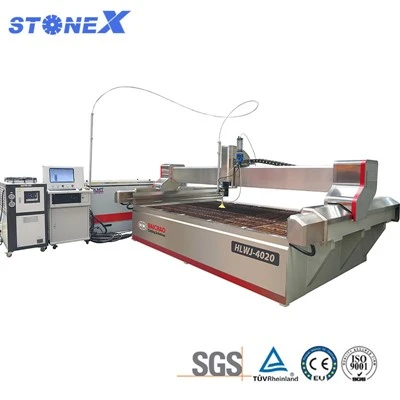
If you’re unsure about your current nozzle lifespan, want to learn more about maintaining your machine, or are looking to upgrade to a more efficient waterjet setup that reduces wear, our team is here to help. We’ve worked with thousands of shops, from small sign studios to large industrial facilities, and we can tailor advice to your specific operation to help you cut costs and improve cut quality. To discuss your waterjet needs and get a personalized recommendation, reach out to our sales team today.
Stone Quarry Machine References:
- Waterjet Technology Association. (2022). Nozzle Wear and Lifecycle Analysis for Abrasive Waterjet Cutting Systems. International Journal of Waterjet Technology.
- Smith, J. (2023). Operating Cost Optimization for Small to Medium Waterjet Cutting Shops. Manufacturing Engineering Journal.
- Thompson, R. (2021). Effect of Abrasive Quality on Nozzle Wear in High-Pressure Waterjet Systems. Journal of Manufacturing Processes.
- Global Waterjet Suppliers Association. (2023). Best Practices for Waterjet Nozzle Maintenance and Replacement Schedules. Industry Maintenance Guidelines.
Nantong Huayi Intelligent Equipment Co., Ltd.
With abundant experience, we are one of the most professional waterjet cutting machine manufacturers and suppliers in China. We warmly welcome you to buy high quality waterjet cutting machine at competitive price from our factory. If you have any enquiry about quotation, please feel free to email us.
Address: Dongsheng Stone Industry Park, Changjiang Town, Rugao City, Jiangsu Province, China
E-mail: jimmy@hualongm.com
WebSite: https://www.hy-stonemachinery.com/
